Listen to us on Spotify:
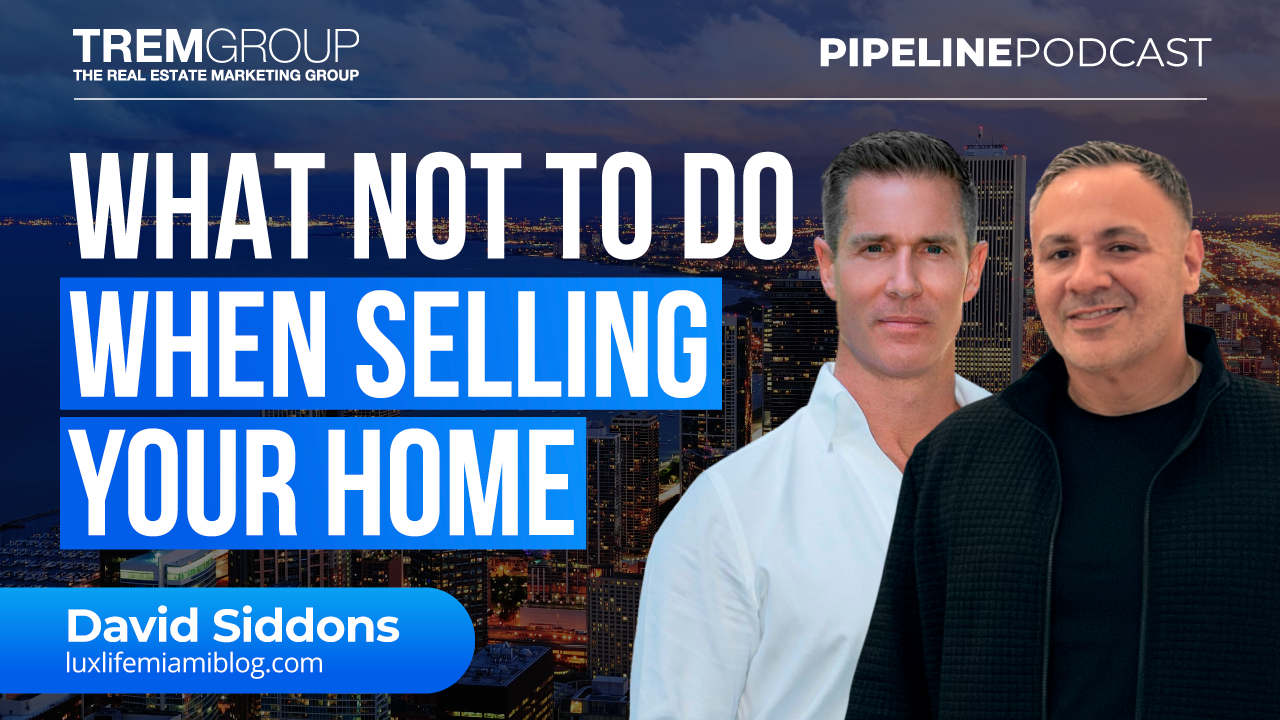
In the luxury real estate market, there´s a massive gap between “listing a property” and actually engineered performance. To bridge that gap, Alex Augustin (CEO and co-founder of TREMGroup), sits down with David Siddons from The David Siddons Group to analyze why traditional methods are failing and how a precision-driven digital engine fueled $1B in sales.
The reality for 2026 is blunt: if your agent is just “handshaking” at charity events and waiting for the phone to ring, they are bringing a knife to a gunfight. In this episode, David and Alex deconstruct why the MLS is no longer enough to move high-value assets and what a true digital ecosystem looks like when results are the only metric that matters.
Beyond the “Digital Business Card”
Most agents treat their website like a static brochure. Alex and David break down why success today requires a performance-driven infrastructure:
- Infrastructure over Aesthetics: A pretty website is worthless without the conversion technology to capture and qualify leads.
- Database as Net Worth: David reveals how his retargeting database of 1 million users and 4,500 monthly leads creates daily inbound demand that traditional methods simply can’t match.
- The “Popcorn” Strategy: Learn how database segmentation and behavioral tracking allow you to ignore the noise and find the 1% of buyers ready to act right now.
- Authority vs. Vanity: Why 1,100+ educational videos and 2,500+ deep-dive articles build more trust with ultra-high-net-worth buyers than any viral trend ever could.
The Syndicate of Experts
Selling a $5M+ home isn’t a one-man job anymore. It requires a syndicate of experts combining media, data analytics, and disciplined execution. This conversation isn’t just for agents looking to scale, it’s a wake-up call for property owners and investors who refuse to leave their results to chance. In a market defined by noise, discipline eats motivation for breakfast. If you aren’t deploying a proven digital engine to reach thousands of qualified prospects daily, you’re not just falling behind, you’re choosing to stay invisible.
Video full transcription
Joining us today is Alex Augustin, Miami-based entrepreneur, digital strategist, and co-founder of TREMGroup, a real estate business accelerator, redefining how agents grow through technology, marketing, and data-driven systems. With over a decade of experience, TREMGroup helps real estate professionals move beyond traditional methods and build scalable, performance-focused business. Today, we break down what property sellers should actually look for when hiring an agent in 2026, from global reach and database strategy to accountability, follow-up, and the discipline required to turn opportunities into closed deals.
This is Better Decisions.
David: So I hope you like that little intro. This is the Better Decisions podcast. We’re doing it not in our studio. This is actually the second time we’ve done a podcast at the studio. I am here today with Alexander, who is the CEO, the head of TREM, which is a digital marketing company here in Miami.
But this video is not for the realtors, although if you’re a realtor and you’re watching this, pay attention because you’re going to need to learn a thing or two here. This podcast is our chance to talk to sellers. Why? Because if you’re a seller, you need to realize in 2026 your rights as a seller of what you should be looking for to help sell your property.
Whoever you hire better come armed with these five key skills, tools, in their artillery, or you should not be hiring them. And that’s why we actually titled this podcast Dumb Ways to Buy. We would have used Dumb Ways to Sell, but it doesn’t rhyme. So Dumb Ways to Buy, and obviously that’s why the intro music is fun.
Alexander: And it’s Five Dumb Ways to Buy and Sell.
David: Pretty much.
So, Alex, let’s go into it. Let’s give a bit of a backstory because we’re sitting here today, and we’ve known each other and had a relationship for more than a decade.
Alexander: Yes. Up and downs.
David: Up and downs. And that’s like all relationships.
It’s never static. It’s not like that. And I think anybody watching, people have come up to me hundreds of times, and they’ve come up to you hundreds of times over the years, and they’ve said to you about working with me, what have they said to you?
Alexander: Yeah. People are always like, I want to do exactly what David Siddons does. I want the same success that David Siddons has. And the first thing I tell them, are you willing to do the same things that David Siddons is doing? Right?
David: Exactly. So, we’ve done this for a very long time. Your expertise is digital marketing.
What I’d love to do is just give a very quick introduction about what TREM is, sum it up, and then we’ll go into like these key things that these sellers need to know.
Alexander: Yeah. So, it’s very hard to tag a name to TREMGroup, the real estate marketing group, because we have evolved through time, right? We started as a website company.
Then all you guys came up to us and be like, hey, I have a beautiful website. Where are my leads? So, we decided over a decade ago to build our own marketing department. And even then, when we were doing the marketing, the lead generation, people didn’t really understand how to deal with online leads and how to turn an online lead into a purchase.
So, then we started our coaching programs and all this stuff. So, I think we’re a mix between a technology and a marketing company, but results focus, right? We hate vanity statistics. We’re not the type of company that is going to provide you a beautiful SEO report at the end of the month that has no value.
We’re not going to tie you to contracts like other companies do. If it’s not working, it’s not working for both of us. For us, it’s important that the people that trust their business and their money with us actually make it back and grow their business, their brands.
So, what I like to say, if we can tag it, we’re a real estate business accelerator.
David: Okay. So, when listings die because dumb things happen, as it’s dumb ways to die in your listing, what are the fundamentals that you absolutely have to have running to make sure that your listing doesn’t die as in it doesn’t sell and you’re not successful? Let’s go through it one by one, and we were discussing this off camera.
One by one, we’re going to deconstruct the key things that you have to do or you have to ask for as an owner of your agent when running your business. And these are the things that you have provided to me and worked with me on over the last decade.
Alexander: Yeah. So, first of all, you’re going to list with an agent, right? Most of the time.
David: Yeah. If you…
Alexander: So, your first decision is what agent do I list for?
David: Yes.
Alexander: And I think there are several things that you should be looking at when you try to choose the right professional to list your home that are going to be elemental for the success of selling your listing.
So, first of all, pick the right professional, right? So, how do we pick the right professional?
David: Yeah. How do we do it? What’s the first thing you should ask your agent as they walk through the door and they sit down and they go, I’m going to sell your house? And you’re going to say, how? And then they’re going to give you a whole bunch of reasons. What’s the first thing that you want to be aware of?
Alexander: So, I know we have a different order, but now that I think about it, the first thing is like, are you doing anything beyond just listing on the MLS and waiting for it to be sold?
David: Okay. Which is almost like the go-to answer, which then unwraps all of these things, because we know that just sticking on the MLS and waiting for the phone to ring, in this day and age, you don’t need any agent for that.
Alexander: Right. You can just pay a fee and list it on the MLS.
David: So, what does that then really mean? If it’s not just going on the MLS and you’re not just taking pictures, what’s the first thing that you’ve got to be aware of in order to sell it?
Alexander: So, does this agent can reach people beyond the MLS? The MLS is a tool local, for example, to our country, but especially here in South Florida, we have buyers that are coming from Latin America, Europe, other countries. So, by just limiting yourself to listing the property on the MLS, you’re pretty much getting out of the way over 50% of the traffic that could purchase this.
David: So, websites like Zillow, and Trulia, and Realtor.com, and all those sites, they’re fed from the MLS.
Alexander: Right. And they’re popular here.
David: And most typical websites also have an IDX feed coming in from the MLS into their sites. But that’s not enough.
Alexander: Well, that’s a pet peeve for us, because us being a real estate website company, a lot of the times we get compared by other website providers. Right?
David: Yeah.
Alexander: And something that drives me crazy is like, oh, I like the design on this site. And yeah, of course, your website has to be pretty and elegant, but would you buy a Ferrari with a Nissan engine? Right? How fast can that car go? So, it’s important to understand that, okay, first, when you’re looking at your website, which is just a piece of your digital infrastructure, right? Your website is not the whole enchilada per se, right?
David: Yeah, absolutely.
Alexander: There’s a lot of other pieces that are important to have a solid digital infrastructure for your business. And just having a website that is pretty, that doesn’t have the right conversion technology, that doesn’t have all the tools that you need to collect people’s information, then it’s worthless, right? It’s just a digital business card.
David: So, let’s break down that website, because as we look at a website, almost every realtor in Miami has a website.
And most of them, if I’m going to generalize here, is that they are a very weak version of a real estate portal website, like realtor.com or Zillow. I say very weak because they don’t have half the tools that they have. It’s just the name of the person, their profile, and then access to some properties in the different neighborhoods, which is what you get from realtor.com.
Alexander: Right. So, if you want to get a user to use your personal website instead of going to Zillow or any of these other platforms, then you have to be better. And I say, how can I be better of a billion-dollar company that built this billion-dollar website? Well, you’ve got to do what they can’t, which is you focus on your market, you provide extremely valuable information per se on the areas of your expertise, you create content. But besides all of that, you have to make sure that everything you’re creating, and they’re coming into the site, the site has the technology to collect their emails and phone numbers.
As a sales person, you’re going to agree. What good is a lead if it doesn’t have a phone number? Or what good is a share of a life?
David: Yeah. You’ve got to produce a product, a website, a product that’s niche, that does something that other websites don’t do, which gives them a reason to register, and then a system that then takes those leads and puts them into a database.
Sounds very simple in principle, but the question I always have is, how big is your database? How can you prove it? Because this goes hand-in-hand. Your network is your net worth, okay? A very well-known saying and never been more true. My database…
Alexander: Big database
David: Is massive. My retargeting database…
Alexander: It’s even bigger.
David: …is actually near a million people. A million people are being retargeted to on a daily, weekly basis that’s then leading them back into my website.
Alexander: And by the way, that wasn’t made overnight. That’s not followers that you purchased just for the vanity metrics. This is work that is being earned through hard work, through years of building unique content, reports.
David: This is it. Yeah. I would say to anybody who’s looking to hire someone, if someone’s going to use your website, why are they going to use your website? Because if your website isn’t better than Realtor or Zillow, why would you use that website? Why don’t you just go to Realtor.com or Zillow? Right.
Realtor. Zillow. Makes more sense.
So in order for you to become better, Zillow is a national company. So is Realtor.com. So is all the other websites out there. Yours has to become more niche.
It has to give information and value to the specific areas that you’re selling. And the only way to create that is obviously you’ve got to make it easy to navigate. It’s got to have the same efficiencies as Zillow or Realtor.com or better.
And you’ve got to add value. Now, you said content. My website, over the years, now in content, we have 2,500 articles on our website, growing.
I mean, we’re pumping them out on a weekly basis.
Alexander: Well, that’s a good point. Just creating a page for the neighborhood with a description of the schools, that’s not real value, right? That’s the minimum necessary.
You want to create real value, you’ve got to continuously be relevant to the time that it’s happening. So people, I’m going to create a page for this neighborhood. I’m going to put a description, some pictures, and all the schools and the restaurants.
Well, that’s not real value, right?
David: Because that’s not up-to-date and current. Very quickly, that information becomes out of date. I mean, we move in a very fast-moving world, and people are looking for current information.
If the Wall Street Journal did not change its pages for a week or two, guess what would happen? It would become irrelevant. The same goes, that’s why you have to produce articles. And that sounds easy, but the reality is, you need massive frameworks and structure to do that.
You need people writing articles, because if you can’t check GPT, it doesn’t work.
Alexander: And now it’s even easier. With all the AI tools that we have, you don’t even need to write it.
You sit in front of a camera, provide your value, and get it transcribed, and publish the article.
David: It’s much easier to produce the content, absolutely. You’ve also got to have the tools and technologies to use that.
But then, on top of that, you’ve also got to think about how people are absorbing and digesting information. Our channel, our communication, our ability came up, actually, from YouTube. You know, our following on YouTube…
Alexander: Your YouTube has grown tremendously recently.
David: We went up to 75… It might be more, actually, now. 75,000 subscribers.
Alexander: We’re gonna give a shout-out to Stephen for that.
David: Yeah. Stephen, thank you very much, man. It’s one of the TREM teams, so you know who Stephen is.
Alexander: Our CMO.
David: Some mystical guy. This is someone who’s actually helped us work on this.
Alexander: A little bit of a mystical guy.
David: It’s been instrumental. And, of course, we’ve worked this, and we’ve produced the content.
We’ve come up with the ideas of what is it that people want to actually listen to, especially now. We’re in 2026. Miami… And, obviously, this is really targeted for the Miami audience.
The main Miami buyers right now are relocating from New York, California, Washington, and they’re looking for information. They’re looking for long-form educational content as they ask questions. What’s the best neighborhood? Where should I live?
Alexander: Where’s the best neighborhood for families, for single persons?
David: Exactly.
Alexander: It just goes so many verticals.
David: Spreads out. And, absolutely. And so, we produce over 1,100 videos. 1,100 videos, that includes the podcast, Better Decisions, which we’re on right now. It includes all the neighborhood reviews.
It includes all the condo reviews. It includes all the questions that we asked. It includes some of what I call our minefield questions.
What’s the best and the worst of anything? This is information that people who are moving really need to know. And what happens is they go with the people that can give them what they can’t get themselves, which is knowledge and information. And they trust those who do it systematically.
Alexander: And it’s important to say that ultra-luxury people, buyers, they can smell an experience a mile away. So, if you’re not working towards yourself to become better, to become a tool of more value, it’s never going to work regardless. So, it’s something that you have to put into your journey, into your path, to actually become an expert so you can then provide value.
David: Would you call that authenticity?
Alexander: Oh, definitely. Definitely, authenticity is a must.
David: You’ve encountered, if it doesn’t get too personal, some issues with people who want results but they’re not being authentic about their journey.
Alexander: Yeah. So, we go through this on a daily basis. Again, I’m going to give another shout out to Carlos, right? We all know Carlos.
David: He’s behind the camera, by the way.
Alexander: He’s doing the editing today. To hold the client’s hands to the training and the coaching, because it’s very different to get a referral from a friend, right? It’s like, you know, call my cousin, he wants to buy a house. That guy is going to answer the phone, and that guy is going to give you a good attitude, because you can refer from the cousin, you’re getting that business. But when you’re dealing with internet people, this is a stranger online. This is a stranger, doesn’t know you, especially if you don’t have a big digital brand like you do.
That’s why it’s so important to grow on that brand. So, when you talk to these people, they know exactly who you’re talking with. And I remember when we went through that with your brand, when you had to quit your gym.
Remember when we had to quit the gym? Because people were like, oh, you’re the guy that follows me online.
David: Well, I just moved to another gym. All right.
That was a good thing. A more private gym. There’s always another gym.
So, yeah, I mean, look, it’s had a weird kind of experience for me to go through this process. What has been really, I guess, as I’ve matured into the role, what has been really amazing is that there’s a level of authenticity that I’ve put out there and authenticity that I’ve got back from the consumers who every week I will get… And please keep these coming. I love these.
Really lovely emails that come from clients saying, I’m moving in from New York. I’ve got my wife, my two kids. We want to move to a family-friendly neighborhood.
We need to be good close to schools. This is our budget. This is when we’re coming into town.
I’ve watched a dozen of your videos. Will you please help me? To me, I’m like, how can I say no to that? To me, this is the relationships that I love the most.
Alexander: And something super important, because some of the people that come to us, a lot of the times they’re starting their digital brands, right? And they don’t have that following.
And we kind of push them to do videos and stuff like that. And even our technology, we develop a lot of placeholder spaces on the sites so you can actually integrate video and get that brand recognition.
David: You’ve built a space for that content to sit.
Now, you’re not going to make that content. They have to make that. And that’s why as a seller, you want to make sure that they say, show me your content.
Show me what you’re doing to add value to the relationship out there.
Alexander: But I think the most important point I wanted to make on that is you work hard towards that, you don’t have to burn the phones anymore. You just have to answer them.
And that’s a big difference when you start your career digitally, where you have to call every lead a hundred times. Well, I could. I could do that.
But I still, and this comes off to the next point, which is I still make calls. Because you have indoctrinated me into a way of thinking and realizing that you can have a very strong digital website. First point.
You can have good content creating inbound traffic. True. All true.
And that you’ve got to make sure you take that. But once you get the lead through, it’s what you do with it that matters. And this is where the rubber meets the road.
And you’ve had this friction to deal with for many years with agents who, you know, discipline needs motivation for breakfast.
Alexander: Totally agree.
David: And you’ve got to be really disciplined in this process.
Alexander: And you know that because you’re a black belt in karate.
David: And you are too. In Jiu Jitsu.
So we’ll be fighting after this. There’s disciplines that you have to absolutely have in life. And I think in professionalism, in the professional job that we have, one of the things that people struggle with is actually doing the work.
And I think once you do it, and you can’t fake it. There’s no faking this. There’s no faking two and a half thousand articles or 1100 videos.
Alexander: Or 200 calls.
David: Or 200 calls. Which is the next side.
Which is, okay,so what you’ve done is you build the site. But the technology that goes on the back end. Take me to point number two.
Because I’m doing a lot of talking right now. And I want you to kind of lead this. Take us through the second most important point that you as a seller need to ask your agent if they can do that and they have to be able to show you.
Alexander: Okay. So the first point was, do you have a following and a digital infrastructure to, you know, support you beyond the MLS? What are you doing with your database? Do you have a database? Is your database just dormant? Can you track? You’d be surprised of how many people I have where we help them sell properties over the $5 million mark to leads that were in the database for over four years. Yeah.
And the only reason why is because those databases are nurtured. They continue to engage and nurture your users. And if you don’t do that, they’ll go with somebody else.
I always tell my people, especially who’ve been doing this for over a year or two, your best lead is not the new lead. Your best leads are sitting on your CRM.
David: Yeah. Which is why your database is so valuable. Because if you have a big database and you can show you have a… And I’d say to anyone, you want to hire me to list your home or your condo, I will come to your home or condo. I will sit down with you.
I will open my laptop, and I will show you the technology that sits behind my website that you and your team created. And I will show you exactly how those leads come in. And usually, I can sit through a meeting.
And within an hour’s meeting, I’ve had at least half a dozen leads that have come in fresh over that hour. We’re getting right now about 4,500 leads a month through our website.
Alexander: 4,500 leads per month. Imagine that.
David: Yeah.
Alexander: So you can’t call all of those.
David: No. But what you can do is filter them and recognize the behaviors.
Alexander: Yeah. Which we also have technology for. You notice that some of the leads that arrive on your database, they bring LinkedIn accounts, profile information. We know who they are.
We know i they’re a CEO, a CFO of a company. So it’s important. We have systems where we can differentiate a simple lead that you don’t have more information to a lead that actually definitely needs higher attention.
If you get, I don’t know, Elon Musk looking for a house, are you going to treat him the same as johnsmith@gmail.com? Probably not. Right?
David: No. But you are going to, again, as those leads come through, this is part of the process.
And this part of the machinery. I’m very fortunate because I have structure around me. And again, maybe part of that point of database is great.
It’s like having a room full of people. It’s like having an auditorium full of a stadium. It’s a stadium.
Because right now, my website is generating about 40,000 visitors a month.
Alexander: And it’s unique to you. It’s not the same as creating an audience on Meta or Google.
David: Exactly. This is exactly people who are in my website going through. So I just filled a stadium of 50,000 people.
This is a good analogy to use, in fact. So I’ve got 50,000 people in my stadium. But not everybody is going to be engaged with me.
Right? I want to get the people up onto the stage that are going to want to react. They’re going to want to engage. And they’re going to want to take action.
Alexander: It’s funny because I actually have an analogy that I use all the time. Let’s say you’re selling popcorn in a stadium that has 50,000 people. And you have an hour.
There’s no way you’re going to go through the 50,000 people and offer your popcorn, per se. But what if you could go through the microphone and just scream popcorn? And you can count whoever turned their heads and just go directly to them and offer your popcorn. Right? So it’s something similar with a database.
Right? Not every 50,000 people are going to buy this product.
David: And if you do it right, using that analogy, you don’t have to be having them turn their heads. They will come to you.
And this is one of the most important things, that when you get into the process of having this database, how you then communicate with that database, which is how many emails get sent out, how much engagement gets sent out. This works into the next level, which may be point number three.
Alexander: And it has to be segmented.
David: Exactly. So you have to create segmented campaigns.
Alexander: So let’s say I was generating leads for an ultra-luxury condominium.
David: Let’s use an example for a product. So let’s say John Smith happens to be a real seller. He was on your website.
He comes in and says, I’ve got a $5 million house that I need to sell. Now, you might have a great website. You may get a lot of people coming through the website.
But do you have people for my house? And how and what are you going to do within your marketing itself to turn all those heads or get them to come to the booth to buy the popcorn? My popcorn.
Alexander: So when it comes to the 4,500 leads that you’re getting per month, I’m sure some of them are looking for $4,000 or $5,000 rentals.
David: There’s probably a few just surfing around, yeah.
Alexander: Right. Would you waste your time offering a $5 million house to those?
David: No.
Alexander: Right? And vice versa.
So that’s why it’s so important that your database is really segmented. Some things that drive me crazy when I see some agencies, they start generating leads from here and there, and they’ll generate some leads interested on a luxury product. And the newsletter, the listing of the week is a $500,000 condo.
You’re actually going against yourself by that.
David: Yeah. You’re actually sending conflicting messages.
So you have to systematically send the correct message to the correct group. Because I don’t sell one property a month.
Alexander: Right. Tell them how much you sell them.
David: This year, our target’s $1 billion, to give you an idea of scale. And then we just came in, actually, our results just came in.
We came in as the number two company at Douglas Elliman, large team in the country.
Alexander: Amazing.
David: And this year, we’re going to obliterate the numbers that we did last year.
A lot of this comes down to the fact that we’re very good at segmenting the groups that we have and messaging them correctly.
Alexander: Again, relevancy is a key element of this industry.
David: That comes back to the content creation as well, making sure you do a video that resonates with them.
Alexander: Let’s talk about that, which is another subject.
David: But when you get into that message that you’re going to do, one of the things that you taught me, that I thought was very, very powerful, was recognizing the key ways, the key phrases and words to draw people in.
So of course, people will look up things like, let’s say you have a house in Coconut Grove. Let’s use that as an example. People will often Google Coconut Grove homes for sale.
Right? Very common term. Right?
Alexander: You can waste a lot of money.
David: You can waste a lot of money doing that.
People will also Google Coconut Grove real estate report. Less people do that. I do a lot of…
Alexander: More educated buyer, by the way.
David: More educated buyer. Maybe they will search for luxury, new construction homes in Coconut Grove. That’s even more segmented.
And then now you’re getting into a realm where you may get some real, real activity going on. But what you’ve designed within your sites, which we’ve done over years, is when you have a particular listing, you create calls to action within the search page, and you create, let’s call them pop-up boxes, because I don’t want to use the business terminology.
Alexander: Yeah, we call them trip wires, boost boxes.
David: It’s a technical term, but essentially it’s a featuring of that specific property so that anyone looking within that market is going to really see your property. This is something that we’ve done to great success. But we’ve done this systematically through many, many ways.
And then once we’ve got someone who wants to sell a home, we’ve got that listing, we’re building campaigns around the audience that we’ve got. And again, this is when I want to get into that audience segmentation. You’ve got cold traffic and you’ve got warm traffic.
Alexander: And hot traffic.
David: And hot traffic. And this is the understanding of who your audience is.
Who’s hungry for the popcorn or who just filled up on hot dogs and doesn’t need to eat?
Alexander: Right. You don’t need to spend any marketing on those.
David: You don’t have to spend anything.
So what we do is we create that sense of interest, intrigue. We understand where the audience is going to go and we build those campaigns around those. And you have, again, working very closely with Stephen, we build and spend a lot of money on these campaigns.
And I always say, if you’re going to hire an agent, ask them to show you their marketing budget for the year. How much money did they spend? I can tell you we spend somewhere around $2.5 to $3 million a year on marketing. Right? How do we do that?
Alexander: I’m glad you mentioned that on this podcast, because people got to understand that to make money, you need to spend money.
There’s no magic wands. There’s computers, strategy people. And what we do is very difficult.
That’s why I don’t think you can see the case studies that we have generated from any of our other competitors. I actually put that challenge out there. If there’s any competitor from TREMGroup, they can get a client to come and say, you know, I receive 4,500 leads per month and sell a billion dollars of real estate a year because of my marketing has grown over the past 10 years.
David: Yeah
Let’s get it on. Let’s get on the ring.
David: It is important to understand that there are many agents who work in many different ways.
And there’s some agents who work from the classic handshaking and the networks that they go and they go to the charity events and they have, you know, socially within a certain group of friends, a certain group of people. But that only goes so far, right? That to me is like bringing a knife to a gunfight, right? You can go out there and you can have all the people at the charity dinners that you go to and all the bars that you meet individuals, but you will never reach the numbers of people that I will reach. In one single day, I’m reaching hundreds of thousands of people every single day. How many people are you meeting?
Alexander: Think about that. It’s almost like posting your listing on CNN, Fox News, right? What is the following of any of these publications?
David: So I think, and this is why, look, the expanse of the digital marketing that you do and the campaign building you do, which I guess maybe leads to the next point, which is maybe, what are we on, a point number three now?
Alexander: Yeah, what was that?
David: Yeah, I think we’re number three.
The point number three is the campaign building. This is what we’re doing. We’re building these campaigns, and you can blow through money.
That’s why I think sometimes agents get nervous about spending the kind of money that I spend on my marketing, because they don’t know if it’s going to work, which is going to lead to point number two, which is quantifiability and measurability.
Alexander: A lot of the times, that doesn’t work, because there’s a lot of companies out there that are willing to take your money and show you these vanity statistics, and they don’t care if you sell or not. All they care is getting their retainer. So a lot of times, when an agent comes here, and we’re like, okay, so what do you wanna do? Well, I sell from Fort Lauderdale to Pinecrest.
And maybe I have a $2,000, $3,000 budget. Well, that’s not gonna work, right?
David: Yeah
Alexander: You need to niche down. You need to segment correctly.
So at the time that you’re building your campaigns or you’re investing your money, you have to be smart about it, because if you’re dispersing your budget this way, it’s basically dispersing very thin, right? You have no power.
David: You’ve diluted your exposure or expertise in the market.
Alexander: When we started, we started with one neighborhood.
David: Well, this is the thing. Look, my team now is a big team. It’s a huge team.
By Miami standards, it’s one of the biggest, right? So we’ve got territory managers. We’ve got a media team. We’ve got a marketing team.
We’ve got an operations team. We’ve got assistants, right? And the territory managers have assistants. And people will come in and be like, well, David or other big agents are selling from Palm Beach all the way down to Palmetto Bay.
So I should be doing that. Well, guess what? It took me 20 years to do that, right?
Alexander: Right. And you have teams that you’re doing.
It’s not like David is driving at 9 a.m. to show up properly in Pinecrest, and then he’s at 3 p.m. on West Palm Beach.
David: It is a syndicate of absolute experts who come together, who are absolute masters. Now I’m actually doing collaborations with other really big agents to take down big deals.
It’s big game hunting, because now you’ve got the artillery of other multiple levels of skilled individuals to deliver the result, which is selling an ultra luxury product.
Alexander: Not only that. When you collaborate and partner like that, you’re multiplying the reach, the database, the engagement.
David: Yeah. We have that with actually several big DE agents that we partner with, and we all have our own respective databases.
We’re not merging them. But when we are marketing out for that product, that unit, that condo, that home…
Alexander: Yeah. You better not merge those databases.
David: We are all hitting with the same message, with the same branding, with the same product that we’re selling. And this comes together.
But it’s that collaboration of hard work that goes with the segmentation and the realization of what we’re doing, rather than just kind of like, well, just throw money at the problem and hope to God that it works.
Alexander: Right, it doesn’t work like that. We put a campaign to the website and we hope we collect the lead.
David: So this is why I think on the point number three, to summarize this, if you’re gonna hire an agent and they’re gonna sell your home or your condo, have them show you the kind of campaigns that they’re gonna run. Ask for a 90-day campaign rundown. What’s that gonna look like? How many digital ads am I gonna have? How many YouTube ads am I gonna have? How many Instagram shorts and reels are you gonna show? How much retargeting are you gonna do? What’s the reach? What’s the strategy of reach? And then, coming to point number four, which is really important, measure the hell out of it.
Alexander: Oh, yeah.
David: Quantify this, because just throwing out there… And you have become really masterful at quantifying the performance of campaigns. And we’ve sat there, part art, part science, where we’ve said, did this work? I just dropped 20 grand over here.
Suppose it doesn’t work.
Alexander: I just dropped 20 grand like this.
David: Oh, I could do it in a day if I really wanted to.
I was really crazy.
Alexander: And not get a lead.
David: Yeah, not get anything.
So, and it also compounds as well. That’s the other thing. Like spending money, if you come into the business and you build a website and you say, right, that’s it.
I built this great website. I’m gonna spend $20,000 from month number one. Guess what’s gonna happen? You’re not gonna get the same result as you will when you’ve done this for year five.
Alexander: Throwing more money is not always the answer. Actually, we’ve seen plenty of times where you’ve got a campaign that is performing amazing and you’re like double down and you actually ruin the campaign. So there’s a lot of moving pieces, but through the experience and the team, we’ve been able to, I don’t know, man, like for example, create and optimize campaigns that generate a lead for $200 per lead because it’s an ultra-luxury product and take them down to under $15.
The same lead, the same campaign, just by optimizing correctly.
David: And that’s because over time as you run more and you’re a Google partner, so as you work through with the campaigns that you’re developing, whether it’s Meta or Google or anybody else and you’re spending budget, you’re starting to get better at it. And that’s part of the database thing as well because it’s much cheaper to spend money on retargeting than it is on cold traffic.
Alexander: Oh yeah, for example, a click online could cost you from $3 to $5 and then a remarketing click will cost you cents.
David: Which is why fortunately for me, my $20,000 goes a lot further than his $20,000 because my retargeting database is a million people and theirs is zero. So this is why every lead he spends is $3, every lead I spend is a cent.
Alexander: No, and you mentioned we’re Google partners, we’re proud of it. If you think about Google, Google is in the business of relevancy. If people go to Google and they don’t find what they want, they’re going to go to Bing, they’re going to go to chat GPT now and there’s no more Google.
So Google will reward you and penalize you. And that’s going to be directly shown out on your ad spend, depends on how relevant the content that you’re showing based on the query of the user. So I see a lot of people, they’re just like other companies or other marketing companies are just trying to get a broad keyword and take them to the homepage, things like that.
Google is going to let you give them the money, but every time that user bounces back, it’s a penalty for you. Well, every time a user stays on your site, stays for longer, continuously browsing, continuously using the site, Google is going to say, oh, this is more relevant. My clients, which is the people searching, like this content.
So now what I’m going to do is…
David: And not just Google, YouTube is massive. This is massive.
Alexander: YouTube is part of Google.
David: I’m sorry, that’s true.
That’s exactly true.
Alexander: So basically, what they’re going to do is they’re going to maybe put you in position number one for cents. So you may be paying a dollar per click on position one, and this guy is paying $5 on position three.
David: Which is why now, after 20 years and 1,100 videos, when I post a video, immediately I’m getting traction.
Alexander: Right. Because you’re relevant, Google, YouTube appreciates that, so they want to show your content prior to other content that might not be as relevant.
David: Which is why it still boggles my mind when I see someone go for a listing, I see an owner says to me, I hired this agent and the property didn’t sell, and I’m like, let me look at their digital footprint to see what they’re doing. No YouTube followers, very little Instagram followers. Again, Instagram can trick you, so it’s not exactly the most accurate way of telling, and no presence on Google.
Alexander: A lot of people buy their Instagram followers, which drives me crazy.
David: That is another thing.
Alexander: They destroy their brand.
Please don’t buy Instagram followers.
David: I would actually… I’m like, the fifth point that I want to raise, we’ve gone through the legitimate stuff of like what you’ve got to do. What I want to do on the fifth point is flip the narrative a little bit and bring about the awareness, the warnings, the land…this is the landmine statement.
Where are the landmines when people get misdirected through clever marketing conversation where someone’s very slick and very convincing, but there’s…I’m sorry, I’m going to say it directly, bullshit in their conversation. Where’s the bullshit?
Alexander: Man, I’ve seen many times people, oh yeah, I have a million Instagram followers, but they have 10 likes on their postings. So that means that they’re mostly bought, purchases.
And the problem is that they think they’re doing a favor to their brand because, oh, you know, my buyer or my seller might come and see my Instagram account, and they’re going to see I have a million followers. But in the technical side, which you’re very familiar with, you cannot undo that. So now, you know, there are systems like lookalikes, audiences built.
Now you’re building lookalikes on bots. So you’re basically destroying the way that you’re going to create your real buyers.
David: And eventually, the whole thing will collapse.
Alexander: It’s not going to work. It’s bullshit.
David: That’s one of the bullshits.
I’m going to give you one of the bullshits that I see, which is when I see people come in, and they are posting content even through YouTube. And I actually did a podcast a few weeks ago with a good buddy of mine, Drew, who runs a studio called The Move. And The Move has some really big names come through the doors.
It’s probably the most successful podcast studio in Miami today. He’s had Theo Vaughn on, he’s had Shaquille O’Neal, he’s had Jonas Brothers, he’s had like David Beckham.
Alexander: He’s a David Siddons.
David: He’s had like some legitimately big people. I’m not in that list.
Alexander: I mean, in your industry, you’re on it.
David: In my industry, I have some notoriety. Thank you.
What he told me was that he said there was a period of time where people would come in and they would shoot podcast videos to no one.
There was no you sitting in the seat.
Alexander: That’s very popular.
David: It was them talking to the camera, and they would just be giving straplines.
Alexander: And they look like they’re talking to somebody else.
David: And there would be a lot of what I call just clickbait comments that were designed just hooks, hooks that really meant nothing, hooks that sounded great, but didn’t actually do anything. And then when you actually look behind it, you look behind the learning process or the knowledge of that individual, you realize there isn’t any.
Alexander: Yeah.
David: That’s another form of bullshit.
Alexander: So if we dissect this subject a little bit, we’re talking about content creation, right? It’s a very broad term, right? Everything is.
David: Yes, it is.
Alexander: The moment you turn on your camera, that’s considered content, right? And something that drives me crazy is, for example, people thinking that creating content means we’re going to do this viral dance on TikTok, right? And things of that nature. Yeah, it’s fine.
Maybe you can do that once in a while, but the real content and what’s going to move the needle is content that is valuable to your audience. If you’re not providing value, you’re providing entertainment.
David: You said it really well.
Alexander: So are you a business person? Are you a salesperson who wants to sell or are you an entertainer?
David: You said, are you entertaining or are you educating? And that’s what you said to me earlier. And someone has said to me before, you know, would you do this particular type of show? And I said, well, I’m more Bloomberg than Bravo, so no. And I think that when you really study the market, you really know it.
And this is why I put a lot of energy into my reports and my data and the analytics that you helped me build, by the way. Several of my analytical models, you’ve actually been and I’ve sat with…
Alexander: That wasn’t easy. It wasn’t, actually.
David: One of his team, who’s great, by the way, Tino, love you, man.
Alexander: Yeah. Let’s do a shout out to Tino, my partner.
David: I’ve made Tino great beyond this years.
Alexander: Daytime married to Tino for, I think, I don’t know how long, 17 years. Yeah.
David: And this is someone who we wanted to build the neighborhood analytics page where you can actually go in and see the data from the last quarter. You can see the dollar per square foot. You can see the days on the market.
Alexander: Yeah. You can see he makes my life easy, right?
David: Yeah. I’m an easy client. What are you talking about?
And this is the kind of thing, the kind of tool that keeps people legitimately coming back to your website because it does add value. And you can’t fake it.
You can’t fake this kind of work. This is like down in the trenches, long hours, editing, going after videos, changing them, improving them in the same way that, you know, you can’t fake a podcast. If you’ve done a podcast now, this is like we’re into like the 80th episode, right? You can’t…you can fake it two or three times.
You’re not going to fake it 80 times. And I think this is when you can recognize if someone is going to…
Alexander: Authenticity, back to authenticity.
David: Authenticity, disciplined, and is going to do the work. Because if they have the tools, that’s one thing.
Actually using the tools is a whole other bag.
Alexander: Oh, my God.
And that’s probably one of the most painful subjects for us, right? We’re talking about that earlier, how sometimes we perform similar technology, similar strategy, and we got people like you selling a billion dollars, and then we have people going through six months selling nothing. And every time we go and dissect the problem, they’re not doing their job. And at those times, we offer, we’re either going to help you, coach you, or please, don’t do this anymore.
I actually let go a client of us two weeks ago, I told you the story, he wasn’t following up on the people he was meeting. So if you meet somebody, you show them a house, and you never call them back, it’s your job to perform the sale, you know? It’s not their job to chase you around.
David: And it’s not uncommon for a house, if you’re a selling agent, to show a house to someone, do a really good job showing, and they will circle back.
Because sometimes they just lack the education. And they need someone who’s educated to show them. So you go off, you show them a house, then you show them three or four other homes, you stay in touch with them.
And then they realize that was the best thing.
Alexander: Please stay in touch.
David: Yeah. And that requires a lot of hard work and effort. And discipline. And discipline.
And you can’t fake it. No. And I think that this is one of the challenges that you have, because for all these great tools that we’ve been through today, and as a seller, I hope you realize that you need all of these incredible tools.
You need the website. Let’s go through it again. To finish off, you need the website, right? You need the tracking.
You need the database. You need the campaigns.
Alexander: You need the follow-up. Authentic follow-up.
David: But all of this doesn’t work unless you’re gonna get off your ass and do the job you
Alexander: If they don’t have you, there’s nothing.
There’s only so much technology, strategy our team is gonna be doing. But we’re not selling the homes for you. You gotta sell them.
And if you’re not willing to put in the hard work, call your leads. Follow up with your leads. We had the example of joining a gym and never showing up.
You’re not gonna get fit, you know?
David: Or doing the same thing over and over again, thinking everything is gonna be the same. Because change is a certainty. And even within a market, even during a period when you list a property, one of the things that happens, which I think is why most people end up losing a listing, is because they don’t stay in good communication with the seller.
They don’t tell them what’s going on. And when the market pivots or changes, because circumstances change in all systems, they don’t have the confidence to tell them, hey, something’s changed. We need to pivot.
And we need to change our strategy here, either by price or by how you’re marketing or whatever you’re doing.
Alexander: Well, I think we are blessed because of our generation. And I always say that, you know, maybe Carlos is a little younger than us, but we are the adaptation generation.
I started listening to music on cassette players or even discs. Then we went to MP3s. Then we went to digital.
The same with everything. So I think it’s something that may be easier for our generation.
David: We’re adaptive. We’re also incredibly resilient. Because if you’re a kid and you’re born in the 70s and you survive through the 80s, you’re pretty stoic. You’re pretty hard to kill.
Alexander: Yeah
David: I think this has been great. I really hope that you watching this, whether you’re an agent or you’re actually a seller, that this brings a lot of value, that this gives you the checklist that you need. I’m gonna do a shameless call to action here.
Alexander: And if you’re an agent.
David: If you’re an agent. You know what you need to do now.
You also need to know who you need to be responsible for in the process. But call to action. If you like this video.
If you’re a seller, pick up the phone. Give me a call. I will sit down with you and I will show you my entire marketing deck.
Everything that I do. All my strategies. My platform that was help constructed with this gentleman and this incredible company.
Nothing comes for free. It takes a lot of hard work. Do not let.
Do not be dumb and let your listing die. Dumb ways to die. We’re not gonna.
That’s not gonna be the case here. Thank you for watching.
Alex, thank you so much.
Alexander: Thank you, Senor. Thank you.
David: Hope you enjoyed this and stay tuned soon for another Better Decisions podcast.