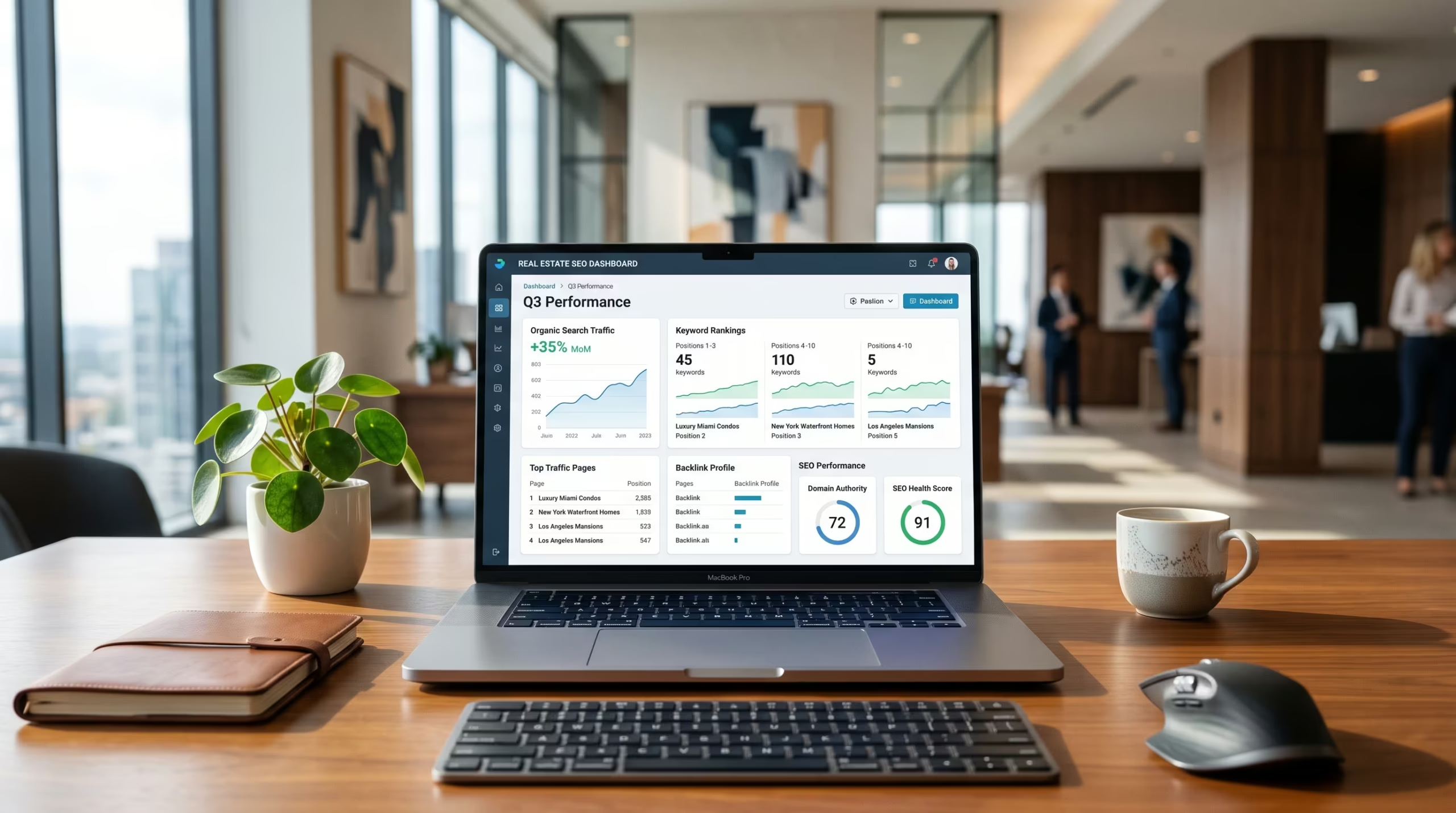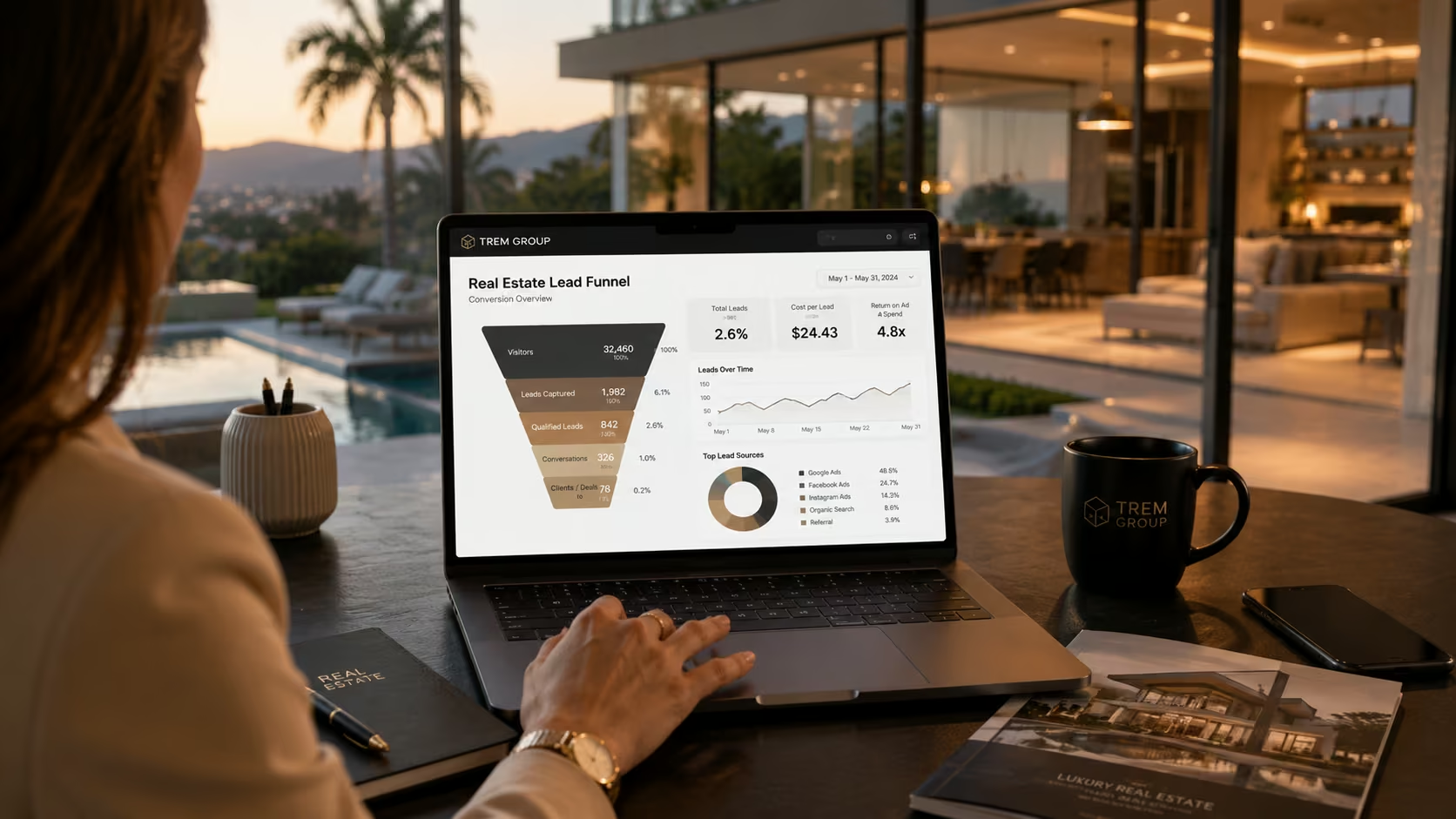
The real estate development market demands a fundamentally different marketing infrastructure than traditional agent-based sales. When you’re managing a multi-million dollar presale campaign with hundreds of units, coordinated broker networks across multiple states, investor presentation decks, and digital advertising budgets that dwarf typical residential transactions, you need strategies designed for high-performance developer success. Over the past 15 years, TREM Group has managed marketing for over $500 million in real estate development projects across Miami, South Florida, and beyond.
We’ve launched everything from luxury high-rise condos in Brickell to waterfront residential communities in Miami Beach. We’ve refined what works, what wastes money, and what actually moves units. This guide shares that experience drawn from hundreds of projects and millions of dollars in paid advertising, broker partnerships, and digital marketing initiatives. Developer marketing is complex. But if you understand the lifecycle from presale to sellout, build the right digital infrastructure, execute coordinated broker and investor strategies, and measure the metrics that actually matter, you can turn a strong project into a market success.
This guide walks you through every step.
Why Developer Marketing Is Different from Agent Marketing
The moment you stop thinking like a single-property agent and start thinking like a development company, your entire marketing strategy has to change. Agents sell homes. Developers sell futures, financial opportunities, and community experiences.
They sell to investors, owner-occupants, and broker networks simultaneously. The messaging is different. The channels are different. The timeline is different.
The budget structure is entirely distinct. An agent lists one home at a time and waits for buyers to find it. A developer launches a project with 200 units, opens sales 18 months before the first occupancy, manages 50 broker partners in different states, and executes pre-construction marketing strategies.
This involves running investor relations campaigns, handling complex financing questions, managing expectations through construction delays, and closing sales across a timeline that spans years. The complexity is significantly higher. Your marketing budget also functions differently. A $3,000 digital ad spend for a single home makes no sense from a cost basis.
For a 300-unit tower with an average price of $1.2 million, a $500,000 advertising campaign becomes a calculated acquisition cost of $1,666 per unit sold. That math works. Your campaigns are measured in cost per qualified lead and cost per closed sale.
They’re substantial enough to sustain sophisticated data tracking, testing, and optimization. You can run A/B tests on landing pages, test different ad creative, segment audiences, and measure every conversion metric. You also market to multiple audiences at once, each with different priorities and decision-making processes.
Investors care about cap rates, absorption rates, exit strategies, and rent growth potential. Owner-occupants care about finishes, location, amenities, and lifestyle. Brokers care about commission splits, marketing support, lead flow, and their ability to sell units quickly.
Your messaging, channels, and landing pages have to speak to all three audiences without diluting your core brand or confusing your market positioning.
The Developer Marketing Timeline: Presale to Sellout
Every development follows a timeline. Understanding it shapes your entire marketing strategy, budget allocation, and resource planning. The timeline determines when you launch marketing, when you peak spending, when you pivot messaging, and when you shift to closeout tactics.
Presale Phase (12-18 months before occupancy)
This is your launch window and your most critical marketing period. You have the most attention, lowest competition, and the highest demand from investors and motivated buyers. Your goal is to lock in a critical mass of reservations that signal market confidence and stabilize your sales velocity.
This phase defines the project from a sales perspective. During presale, you need a high- performance website with virtual tours, floor plan configurators, and investment metrics. You need broker outreach campaigns with personalized presentations and attractive commission structures. You need investor roadshows, PR in major publications, media coverage, and condo marketing initiatives at scale.
You run your hardest during this phase because the window is narrow and the opportunity to establish market dominance is time-sensitive. Miss the presale window and you lose momentum.
Active Sales Phase (6-12 months after presale closes)
Sales intensity continues but shifts in character. You have real data now: actual sale prices, buyer demographics, broker performance, and unit mix preferences. You optimize based on this data.
Digital campaigns become more granular and targeted. Broker relationships strengthen or weaken based on results. You test new markets and channels to find additional sources.
Demand is cooling compared to presale, so your messaging emphasizes scarcity and urgency more directly. Incentive programs become more attractive. You’re no longer launching; you’re scaling efficiency.
Construction and Marketing Phase (During construction)
Most developers make a critical mistake here: they reduce marketing once construction starts. This is backward thinking. You have unsold inventory in a building that is actively rising, and buyers often get anxious when construction timelines extend.
Financing questions multiply during this period. You need a robust content marketing strategy that updates buyers, generates confidence, and addresses technical questions proactively. You must document the build process, share occupancy timelines and manage expectations through your own channels before outside speculation or negative reviews do.
This phase is about brand maintenance and keeping remaining inventory top of mind.
Final Phase and Sellout (Last 6 months before and after occupancy)
The final push is critical and intense. You’re racing to hit target absorption before first occupancy. You offer move-in incentives, run final push campaigns, and double down on remaining units. After occupancy, the focus shifts to closing remaining sales and managing the owner transition. Marketing doesn’t stop; it simply evolves. Since remaining inventory typically moves slower after occupancy, more sophisticated pricing or targeted incentive strategies become necessary to achieve total sellout.
Building a High-Converting Development Website
Your website is your sales infrastructure. For a $300 million project, it’s doing heavy lifting that a standard real estate site never touches. It needs to function for three completely different audiences, manage complex floor plan options, handle reservations, display real-time availability, and build confidence through design and content quality.
Your website is often the first impression buyers have of your project. It has to deliver.
Essential Components
- Interactive Floor Plan Visualizer: Dynamic floor plans where users click a unit and see price, square footage, finishes, and availability status in real time. This drives significan conversion improvement over static files. Users want to explore their future home; give them the tools to do so.
- 3D Virtual Tours and Renderings: 360-degree tours of model units and common areas. For presale projects, photorealistic renderings of the building and neighborhood are non-negotiable. They reduce purchase anxiety and allow investors to visualize the finished product before construction completes.
- Investment Metrics and Financial Modeling: For investor-focused projects, display cap rates, cash-on-cash returns, and appreciation scenarios. Providing downloadable financial models is key, as investors spend significant time studying these projections.
- Real-Time Availability Widget: Show which units are available, reserved, or sold in real time. Nothing creates urgency like watching inventory move. If your sales velocity is high, this transparency builds immense market confidence.
- Exclusive Broker Portal: Dedicated access for licensed brokers including commission structure, marketing assets, lead capture tools, and seamless CRM integration. Brokers need a dedicated ecosystem to drive traffic to your project efficiently.
- Multi-Point Lead Capture: Strategic touchpoints on the homepage, floor plans, virtual tours, and investor sections. Different users convert at different moments; capturing data at every stage allows you to track and understand buyer behavior.
- Neighborhood and Lifestyle Content: Community insights, local dining, transportation access, and cultural amenities. Buyers need to connect with the location as much as the unit. This is where high-level lifestyle marketing happens.
Design Principles
Your site needs to build confidence at every step. Target buyers are making six-figure decisions based partly on how your website looks, performs, and communicates. A slow site, broken virtual tour, outdated pricing, or clunky broker portal signals carelessness and raises doubt.
You need fast load times, professional photography, clear messaging hierarchy, mobile responsiveness, and zero friction when requesting more information or a showing. Mobile optimization is non-negotiable. 60 to 70 percent of your traffic comes from mobile devices.
Your floor plans, virtual tours, and availability widget must work flawlessly on phones and tablets. Users will abandon a clunky mobile experience instantly and move to a competitor’s site. Test on real devices, not just desktop simulators. Speed and simplicity are the foundations of user confidence.
Pre-Construction Lead Generation Strategies
During presale, you have zero physical product to show. Buyers cannot walk the building, see finishes, or experience the community in person. You’re selling a vision supported by renderings, financial projections, and your company’s track record. Your lead generation strategy has to acknowledge this reality and bridge the gap. This is fundamentally different from marketing a finished asset.
Direct Mail to Qualified Buyers
In Miami and South Florida markets, targeted direct mail to neighborhoods where comparable buyers reside still outperforms many digital channels for investor-focused properties. Target higher-income ZIP codes, areas with similar real estate purchase patterns, and neighborhoods where past buyers have originated.
A premium printed brochure with photorealistic renderings and a specific call-to-action lands differently than a digital ad.
While response rates may be lower than digital, the lead quality is significantly higher.
Presale Events and Virtual Showcases
Host virtual launch events that include project walkthrough video, developer presentation, financial overview, and exclusive special presale pricing. Record these sessions to use them as high- value content assets.
Event attendees represent highly qualified leads; specifically, those who stay for the duration of the event demonstrate serious intent and should receive prioritized outreach and strategic follow-up.
Partnership with Adjacent Markets
Buyers often move between key geographical hubs. An investor in New York may be looking for their third property in Miami, or a relocating executive might move from Fort Lauderdale to Brickell.
Partner with relocation companies, corporate real estate departments, international property consultants, and global investor networks to source qualified leads. These partnerships are essential for pre-construction marketing as they expand your reach beyond local markets limitations.
Digital Advertising for Developments
Digital advertising for developer projects is fundamentally different from standard consumer digital ads. Your budgets are larger, your customer acquisition cost (CAC) tolerance is higher, and your sales funnel is longer.
This requires a sophisticated approach to data, audience targeting, and creative testing. In this environment, every dollar spent must be measurable and optimizable.
Google Ads Strategy
Search-based advertising captures high-intent traffic. Professionals searching for ‘luxury condos Brickell,’ ‘pre-construction Miami Beach’ or ‘condo marketing’ insights are actively in the consideration phase, making Google Ads for real estate the most effective tool to capture these searches with landing pages specifically optimized for each audience segment.
Structure is paramount: separate campaigns for investor-focused keywords from those targeting owner-occupants. Utilize audience data to implement retargeting strategies, bidding higher on returning visitors who engaged with your floor plans but have yet to convert. Additionally, manage negative keywords aggressively to prevent budget waste on unqualified search queries.
Facebook and Meta Advertising
Facebook and Instagram are exceptional for awareness and early-stage consideration. Your target audience spends significant time on these platforms, allowing you to target by interest, behaviors, income levels, and lookalike audiences derived from your current buyer database.
Video assets showcasing the building, neighborhood, and lifestyle consistently outperform static imagery. We recommend testing multiple creative angles: a lifestyle angle plays for owner-occupants; an investment angle for portfolio buyers; and a location-centric angle for relocating professionals.
By running all three simultaneously, you allow data to dictate which messaging resonates most effectively with your audience.
Programmatic Advertising
For larger development budgets, programmatic display advertising allows you to reach high-net-worth audiences across the web with precision. Programmatic platforms can identify and target visitors of luxury hotels, high-end restaurants, and upscale publications.
This is where sophisticated retargeting happens. If a prospect visits a competitor’s site or researches similar properties, your project details can follow them across their digital journey. At TREMGroup, we have managed over $500 million in total digital ad spend across developer projects.
The pattern is consistent:presale periods demand high-intensity spend and aggressive targeting, but disciplined optimization typically reduces your cost per qualified lead by 20 to 30 percent within the first 90 days.
Broker Outreach and Co-Op Programs
Individual brokers and large firms move enormous volumes. While your direct marketing might reach 20,000 people, a top-producing broker in Miami Beach has direct access to hundreds of qualified prospects within their personal network.
Your co-op commission program is one of your most critical marketing investments; underinvesting here is a strategic mistake.
Program Structure
Offer competitive co-op commissions during the presale phase, structured to reflect your unit pricing and market demand. Provide exclusive first access to specific inventory or floor plans.
Most importantly, equipping partners with specialized websites for brokerages ensures they have the marketing assets and lead capture tools needed to move units efficiently.
The best brokers don’t “need” a project; they look for partnerships where they benefit from exclusivity, seamless marketing support, and transparent commission structures.
Broker Events and Training
Host quarterly broker events for your top-producing partners.Update them on sales velocity, construction milestones, and market feedback. When brokers feel included in the development process, their investment in the project grows.
Provide “sell-sheets” and short-form training videos where the project director explains the finishes, building systems, and investmentopportunities. This ensures brokers become confident advocates rather than hesitant sellers.
Investor Marketing and Presentations
Investors operate differently from owner-occupants. They don’t prioritize kitchen layouts or aesthetic finishes; they focus on acquisition costs, rental income, appreciation potential, cost of capital, and exit timeline. They require underwriting models and comprehensive comparable analysis.
To convert this audience, you must demonstrate your development company’s track record and financial stability. You have to speak their language.
Investment Presentation Deck
Create a comprehensive investment presentation deck that covers: market overview and demand drivers, comparable sales analysis, underwriting assumptions, pro forma financials, developer background and construction milestones.
This document is sales-critical. It must be professional, thoroughly researched, and present realistic data that investors can verify independently. A single set of inflated figures can permanently compromise your credibility.
Investor Roadshows and One-on-Ones
For larger projects, travel to major investor markets (New York, LA, international markets where your target buyers live) and host presentations. Meet with institutional investors, family offices, and high-net-worth individuals directly.
In-person engagement remains a high-volume driver in the developer space. Schedule one-on-one calls with qualified prospects; these conversations provide invaluable insights into price sensitivity, unit preferences and the financing structures required by the market.
The Role of Content Marketing for Developers
Content marketing for developers is a long-term strategy. You aren’t just running ads; you are building authority and maintaining “top-of-mind” awareness with prospects who may not close for 12 to 18 months.
This sustained engagement builds trust and positions your company as a dominant market player.
Construction Update Blog
Publish monthly construction updates featuring site photography, progress against the master timeline, and key milestones. This content reassures buyers that the project is advancing, builds confidence in your project management, and provides a reason for recurring site traffic.
Tracking engagement metrics on these updates helps refine your pre-construction marketing strategy.
Market Education Content
Analyze broader market trends: migration patterns, real estate investment strategies, and emerging neighborhoods. This positions your company as a market authority and captures search traffic for high-level industry terms, while your project-specific keywords handle the transactional work.
Educational content is the foundation of long-term credibility.
Video Content
While production quality is important, authenticity is paramount. A three-minute video of your project director walking through the site—discussing progress and addressing investor FAQs—often outperforms a polished corporate production.
People invest in teams they trust; allowing your leadership to speak directly to the camera builds a genuine connection.
Measuring Developer Marketing ROI
Developer marketing is built on different metrics than traditional real estate marketing. You’re tracking cost per qualified lead (CPL), cost per sale (CPS), absorption rate, broker performance, and investor acquisition cost.
All of these factor determine whether your project achieves the target sales velocity within the projected timeline.
Key Metrics to Track
- Lead volume and quality: Not all leads are equal. A broker-sourced investor lead carries a different weight than a digital ad click. You must track lead source, qualification scores, and conversion rates by channel to understand true performance.
- Cost per qualified lead: Calculate the specific cost to generate a high-intent lead from each channel. Digital advertising, direct mail, and broker partnerships all have different cost structures. Identify which channels yield the highest quality at the lowest cost.
- Conversion rate by source: A lead from your website might convert at 5 percent, while a broker-sourced lead might convert at 20 percent. Tracking this data allows you to allocate your pre-construction marketing budget toward the most effective channels.
- Cost per sale (CPS): This is the ultimate performance metric. Divide your total marketing spend by the number of units sold. If you spent $2 million to sell 200 units, your cost per sale is $10,000 per unit. Whether this is acceptable depends on your average unit price and overall project margins.
- Sales velocity: This is your leading indicator. Track cumulative sales against your target timeline. If your goal was 60 percent sold within 12 months and you are at 35 percent, your marketing strategy needs an immediate pivot.
- Broker productivity: Identify which brokers generate the highest volume and the highest-priced sales. Analyze the sales-to-lead ratio for each partner. Double down on top performers and adjust your co-op programs to reward those driving results.
- Website engagement: Monitor page views, time on site, floor plan interactions, and virtual tour completions. A decline in these engagement metrics is an early warning sign that market interest is cooling or your condo marketing message needs refreshing.
Case Study Snapshot: What $500M+ in Developer Projects Looks Like
Over 15 years, we’ve managed marketing for $500+ million in development projects across South Florida and international markets. Our portfolio includes a diverse range of assets: from 80-unit mid-rise residences in Wynwood and 250-unit luxury condos in Brickell, to waterfront developments in Miami Beach and complex mixed-use projects.
What we’ve learned applies across all scales: presale windows are narrow and high-intensity. Broker relationships move enormous volume, and investors require a completely distinct messaging strategy.
We have proven that websites functioning as sales infrastructure consistently outperform sites that prioritize aesthetics over lead capture. Digital advertising at scale only works with the budget discipline to test, optimize, and pivot away from underperforming channels.
Content marketing is what maintains market confidence during long sales cycles. Projects that succeed typically achieve 50 to 60 percent sales velocity within the first 12 to 18 months of presale.
When a project struggles, the variable is almost always the marketing execution. While location and pricing are fundamental, it is the marketing strategy that determines if the market recognizes the project’s value and converts interest into executed contracts.
Choosing the Right Developer Marketing Partner
Developer marketing is a specialized discipline. It requires experience managing $500,000+ digital advertising campaigns, an intimate understanding of presale dynamics, and established relationships with global broker networks.
It demands the ability to build developer websites that serve as complex sales engines, not static digital brochures. When you’re evaluating a marketing partner for your development project, look for specific experience:
- How many presale projects have they successfully executed?
- What was the average sales velocity they have achieved for similar assets?
- Do they have case studies and client references?
- Do they have in-house capability for website development, digital advertising, broker outreach, and content creation, or are they outsourcing everything?
The best partners recognize that presale is a sprint; strategy must be implemented in weeks, not months. They should be able to activate broker networks immediately and manage large-scale digital budgets with continuous optimization.
The right marketing partner becomes a seamless extension of your development team. They understand your timeline pressure and financial objectives, measuring results obsessively with total transparency. Developer marketing is complex, but it is also highly results-driven.
A dominant marketing partnership, combined with professional execution, ensures you reach target absorption. We know this because we have delivered these results across hundreds of projects.
Investing Money in Marketing With No Results?
Real estate professionals like you turn to us when their marketing isn’t working. Stop wasting your budget on strategies that don’t deliver. Let’s create a marketing plan that drives real growth and success for your business.