Most agents don’t have a lead problem. They have a system problem.
Leads are everywhere: in search results, on social feeds, sitting inside old client databases, standing in the open house down the street.
The agents who win build repeatable machines that pull those leads in, sort them, and follow up before anyone else gets the chance.
Below are 50+ real estate lead generation ideas, grouped by channel, each with a specific tip or benchmark attached.
It is a working playbook for lead generation for real estate agents at any stage, whether you’re a solo agent on a tight budget or a team scaling spend.
Some tactics cost money. Some only cost time. The best producers run a mix of both, because no single channel stays safe forever.
A Google algorithm update, a Meta policy change, or a referral source drifting away can wipe out a quarter overnight when everything you’ve got rides on one source.
We’ve spent more than 10 years working only in real estate. We’ve managed over $450M in ad spend, built our own IDX platform called IDXBoost, and watched what actually converts across thousands of campaigns in Miami, in luxury markets, and everywhere in between.
The tactics below are the ones that produce. Pick the categories that fit your budget and your market, run them long enough to read the data, then double down on whatever brings real conversations instead of just clicks.
Paid Advertising
Paid channels buy you speed. Turn them on this week and you can have leads in your inbox by Friday.
The trade is cost and discipline. Money disappears fast when targeting and tracking are sloppy.
- Google Local Services Ads (LSA).
These run above the standard search ads and show your photo, your reviews, and a “Google Screened” badge.
You pay per lead, not per click, and you only get charged for calls and messages that match your service area. Cost per lead in most markets runs $25 to $75.
Dispute the junk leads inside the dashboard so you stop paying for wrong numbers and out-of-area calls.
- Google Search PPC.
Bid on high-intent keywords like “homes for sale in [your city]” and “[neighborhood] condos.” A buyer typing that phrase is closer to a transaction than almost any social lead you’ll find.
Send the click to a focused landing page with one form on it, not your homepage. Expect anywhere from $8 to $40 per lead, depending on how competitive your market is.
- Meta lead ads (Facebook and Instagram).
The in-app lead form pre-fills name, email, and phone, which lifts conversion because nobody has to leave the app or type a thing.
Use it for seller valuation offers and buyer guides. Volume runs high and cost per lead stays low, often $5 to $20.
Quality is lower too, so qualification matters more here than just about anywhere.
- Facebook listing ads.
Promote a single new listing, or a price drop, to people in nearby ZIP codes. Listing ads pull buyers and double as free advertising for your seller.
That makes them an easy win to mention at the next listing appointment.
- Instagram Story and Reel ads.
Vertical video gets cheaper reach than static posts on Instagram right now.
A 15-second walkthrough of a property with a “DM me for details” call to action collects warm inquiries from people who are already scrolling homes.
- YouTube pre-roll ads.
Run a short, skippable ad in front of local content and home-buying videos. Target by ZIP code and interest.
Pre-roll is cheap on a cost-per-view basis, and it builds name recognition, so when your listing shows up later you’re already a familiar face.
- Retargeting.
Most people who visit your site leave without filling out a thing. Retargeting shows ads to those visitors across Google and Meta after they go.
These campaigns almost always carry the lowest cost per lead in your whole account, because you’re talking to people who already know you.
Always run it. This one is underrated.
- Google Display network for brand presence.
Banner ads across news and lifestyle sites keep your name in front of a geographic audience between searches. Treat display as support for your search and retargeting, not as a primary lead source on its own.
- Zillow, Realtor.com, and portal leads.
Buying leads from the major portals and other real estate lead generation companies gives you instant volume.
The catch: you’re often competing with other agents for the same buyer, so speed of response decides who wins.
Track your true cost per closing, not just cost per lead, before you scale spend here.
- Nextdoor ads.
Nextdoor reaches homeowners inside specific neighborhoods, which makes it strong for seller and farming campaigns.
A “just sold on your street” ad lands differently when the audience lives three doors down.
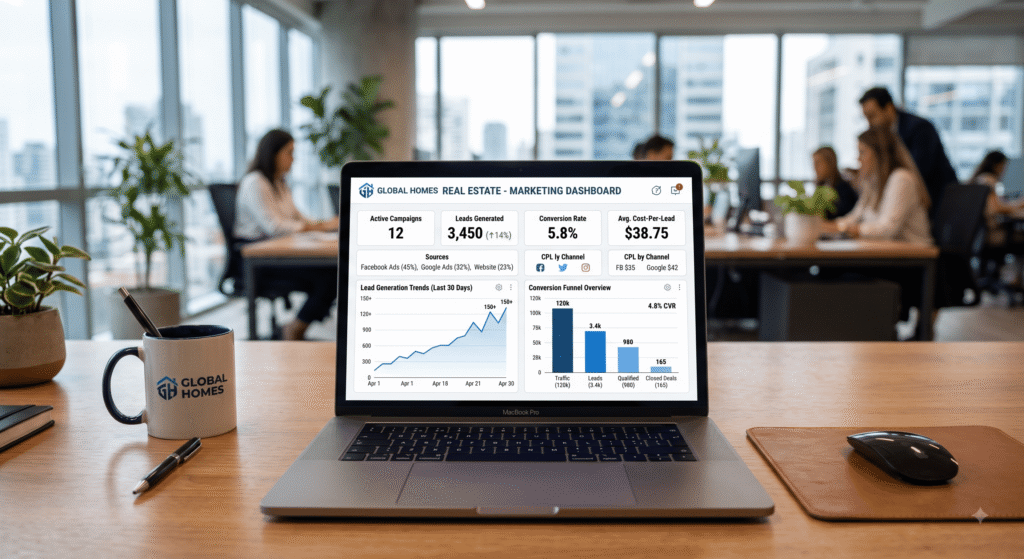
If you want these channels built and managed by a team that has placed over $450M in real estate ad spend, our real estate lead generation services cover strategy, build, and daily optimization so you can stay in front of clients.
SEO and Content
SEO is slow to start and hard for anyone to take away. A page that ranks keeps producing leads for years at no per-click cost.
Content compounds, and that’s why every serious team runs it alongside paid.
- Pillar pages.
Build long, complete guides on the topics your market searches: “moving to [city],” say, or “[city] neighborhood guide.”
A strong pillar page earns links, ranks for dozens of related terms, and gives you a home base to link your service and listing pages from.
The article you’re reading is a pillar page.
- Local SEO.
Target “[service] near me” and city-specific terms, and get your name, address, and phone identical across every directory.
Local-intent searches convert hard, because the person is ready to act in your exact market.
- Google Business Profile.
Claim it, fill it out completely, add photos weekly, post updates, answer the questions that come in.
A well-kept profile shows up in the map pack, which sits above organic results and pulls a large share of local clicks at no cost.
- Neighborhood blogging.
Write about the places you sell. School roundups, restaurant lists, market updates, commute breakdowns.
These posts catch buyers early in their research and tag you as the local expert before they’ve even picked an agent.
- IDX and listing pages.
Indexed property pages capture searchers looking for specific homes and areas. Each listing and neighborhood page is a doorway from search into your site.
Our IDXBoost platform builds these pages to convert visitors into registered leads, not just to look good.
- Long-tail buyer keywords.
Target specific phrases like “pet-friendly condos in Brickell under $500k.”
Lower search volume, far higher intent, much easier to rank for. Stack enough of these and the traffic adds up to serious lead flow.
- Market report content.
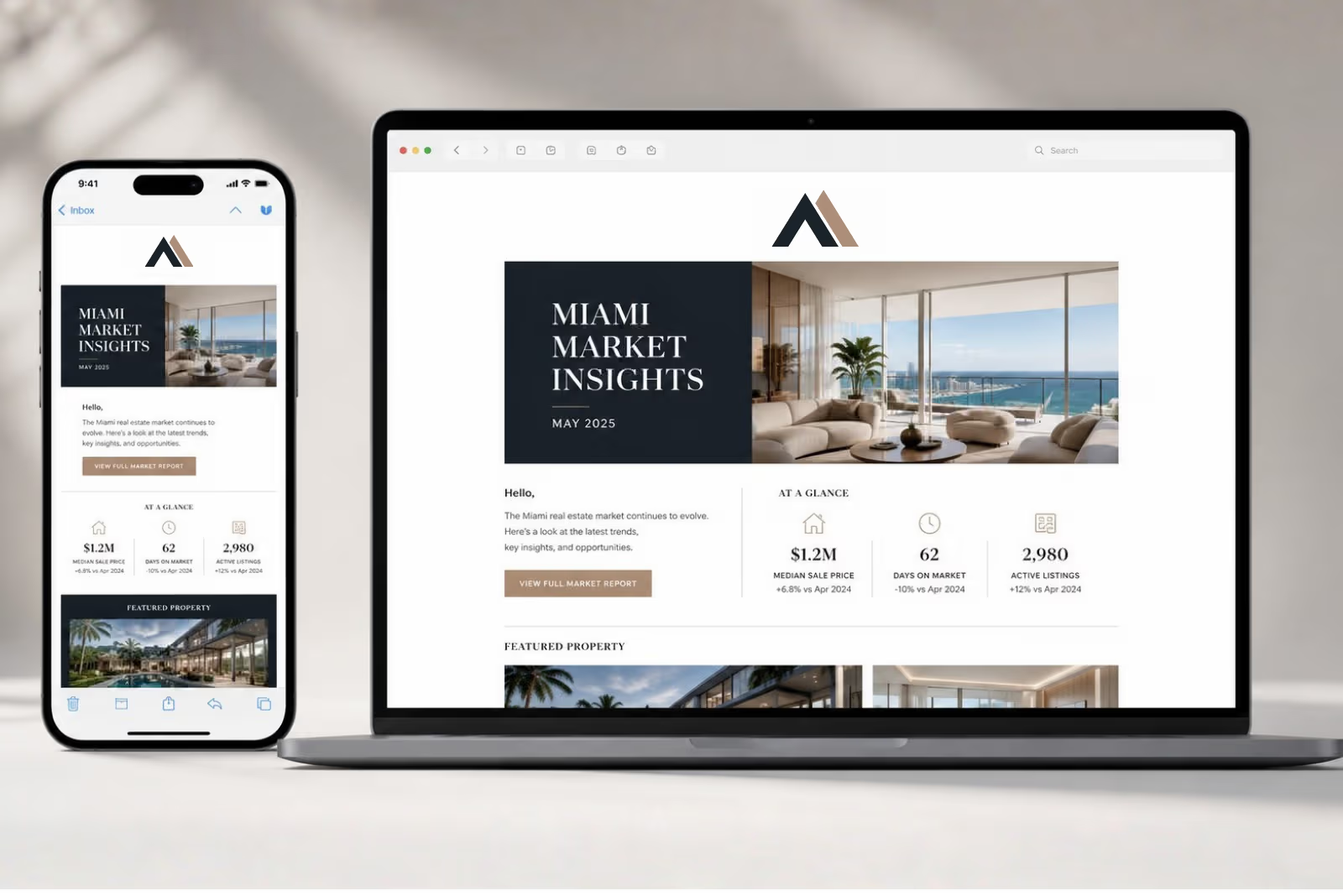
Publish a monthly or quarterly market update for your area, with real numbers on prices, inventory, and days on market.
Sellers and buyers both search for this, and it hands you a reason to email your database every single month.
- Video SEO on YouTube.
YouTube is the second-largest search engine.
Neighborhood tours and “pros and cons of living in [city]” videos rank in both YouTube and Google, and they pull motivated relocation buyers who’ll watch for ten minutes before reaching out.
- Internal linking.
Link your blog posts to your service and listing pages with clear anchor text.
This passes ranking strength to the pages that actually make you money, and it guides readers toward a next step instead of a dead end.
- Backlinks from local sources.
Get mentioned and linked by local news, community sites, and partner businesses.
Local, relevant links move your rankings more than generic ones, and they often send referral traffic on their own.
A purpose-built site is the foundation under all of this. See how our real estate websites are built around IDX and lead capture from the first page.
Website and Conversion
Traffic without conversion is a leak. These tactics turn the visitors you already paid for, or earned, into named and contactable leads.
- Home valuation tool.
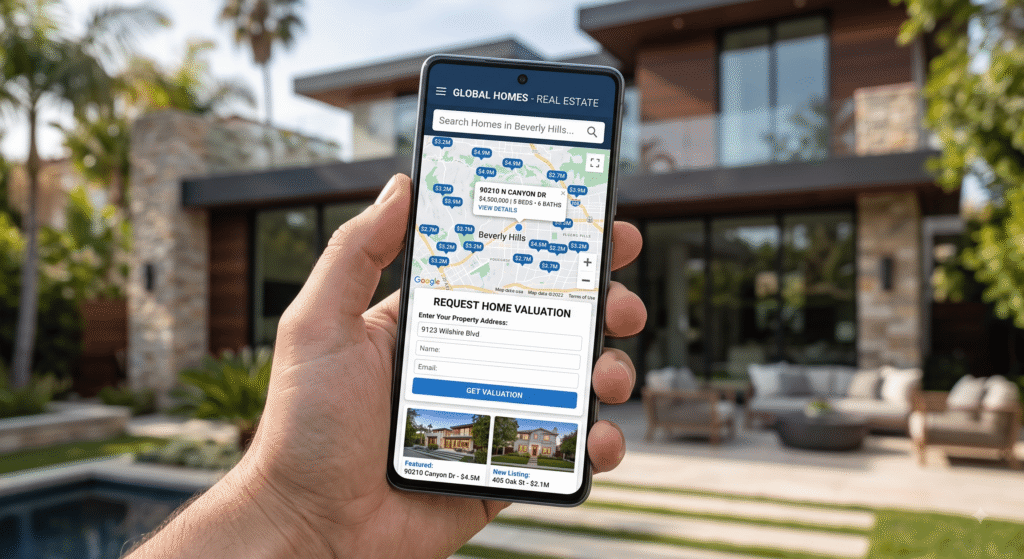
A “what’s my home worth” tool is the single strongest seller magnet online.
Homeowners want the number, and they’ll trade an email and address to get it.
Just follow up fast with a real, considered estimate, not an automated range.
- IDX property search.
Let visitors search live listings on your own site instead of sending them off to a portal. Gate saved searches and favorites behind a quick signup.
IDXBoost handles both the search experience and the registration prompt, so browsers turn into leads.
- Lead magnets.
Offer a buyer’s guide, a relocation checklist, or a first-time buyer toolkit in exchange for contact info.
Match the magnet to the visitor: seller content on seller pages, buyer content on buyer pages.
- Exit-intent popups.
When the cursor moves to leave, trigger one offer.
A free valuation or a new-listings alert recovers a slice of the visitors who were about to bounce with nothing.
- Live chat and chatbots.
A chat widget answers the quick question that decides whether someone fills out a form at all. Even a simple bot that grabs a name and number after hours keeps leads from slipping to the next site.
- Click-to-call buttons.
Make your phone number tap-to-call on every mobile page.
Most of your traffic is on a phone, and some people want to talk right now, not fill out a form. Don’t make them hunt for the number.
- Short forms.
Every extra field cuts your conversion rate. Ask for name, email, and phone, then gather the rest in conversation. You can always learn more once they reply.
- Saved-search alerts.
Let buyers save a search and get emailed when matching homes hit the market.
This gives you a reason to stay in their inbox for months, plus a clear signal of what they actually want.
- Speed and mobile performance.
A slow page bleeds leads before the form ever loads. Aim for under three seconds on mobile.
Compress images, cut the heavy scripts, and test on a real phone, not just your desktop.
- Clear single call to action per page.
One page, one job. A valuation page should ask for a valuation, full stop, not also push a buyer guide, a newsletter, and a webinar.
Competing offers confuse visitors and drag down the action that matters.
Social and Video
Social media keeps you in front of your sphere and feeds the algorithm reasons to show you to new people. Video carries the most reach right now, and it isn’t close.
- Listing walkthrough videos.
Film a tight, well-lit tour of every listing and post it across Instagram, Facebook, TikTok, and YouTube. These earn the most engagement of any post type, and they quietly sell you to the next seller watching.
- Neighborhood tour content.
Short videos showing a street, a coffee shop, a park, the homes nearby. They give relocation buyers the feel of a place, and they build trust faster than any listing, because they’re about the life, not the sale.
- Market update Reels.
A 30-second monthly update on prices and inventory positions you as the source people check in with. Keep it simple. One stat, one takeaway, posted the same time every month.
- Client testimonial videos.
A 60-second clip of a happy buyer or seller outperforms any claim you’ll ever make about yourself. Social proof on video converts because viewers see a real person, not a graphic.
- Behind-the-scenes content.
Show the offer that got accepted, the inspection surprise you handled, the keys getting handed over. People hire agents they feel they already know, and process content builds exactly that feeling.
- LinkedIn for luxury and relocation.
For high-end and corporate-relocation business, LinkedIn reaches decision-makers the other channels miss. Post market insight, not listings, and let the conversations start in DMs.
- TikTok local content.
Local “things to know before moving here” videos reach a younger buyer pool that’s aging into first purchases. Even a modest account can pull DMs from people planning a move.
- Consistent posting cadence.
The algorithm rewards regular, native video over the occasional polished drop. Three to five posts a week beats one perfect video a month, every time, for reach and lead flow.
Sphere of Influence and Referrals
Your past clients and personal network are the highest-converting, lowest-cost leads you’ll ever get.
People referred by a friend close at far higher rates than any cold ad, and they rarely shop you on price.
- Systematic past-client touches.
Map out a full year of contact for every past client: the anniversary of their closing, a market update, a holiday note, a plain check-in call.
The agents who get repeat and referral business are the ones who stay in touch on purpose, not by accident.
- Ask for referrals directly.
Most people are happy to refer to you and simply never think to.
So ask at closing, ask again in your follow-up, and tell them exactly who you help so they can spot the match. “Who do you know thinking about a move this year” beats a vague “send people my way.”
- Pop-by visits.
Drop off a small, useful gift to past clients in person a couple of times a year. The face-to-face touch is rare now, and that’s exactly why it sticks and gets you mentioned at dinner.
- Sphere database segmentation.
Sort your contacts by likelihood and timing. A friend who just had a second kid and a renting coworker should not get the same message. Relevance is what turns a contact into a lead.
- Closing gifts that get talked about.
A thoughtful, personal gift turns a client into a promoter. Skip the branded swag. Give something they’ll actually mention when a friend asks who they used.
Partnerships and Networking
Other professionals talk to your future clients before you ever do. Build relationships with the people whose clients are about to move, and you tap a steady stream of warm referrals.
- Lender partnerships.
Loan officers meet buyers early, often before they have an agent at all. A genuine two-way referral relationship with a strong lender sends pre-qualified, ready-to-move buyers your way.
- Local business cross-promotion.
Partner with movers, stagers, contractors, interior designers. Refer your clients to them, get referred back, and co-host events that put both audiences in one room.
- Attorney and CPA referrals.
Estate, divorce, and financial professionals regularly have clients who have to buy or sell. A trusted relationship here brings you transactions with built-in urgency.
- Builder and developer relationships.
New-construction projects need agents to move inventory. Getting on a builder’s preferred list, especially in active luxury and condo markets like Miami, can supply steady deal flow for years.
- Community involvement.
Sponsor a local team, join the chamber, show up at the events. Real estate is local trust, and the agent everyone recognizes around town gets the call without ever running an ad.
Database and Nurture
Most leads aren’t ready today. The money sits in the follow-up that keeps you present until they are. A captured lead with no nurture behind it is a wasted ad dollar.
- Email drip campaigns.
Build automated sequences for each lead type. New buyer leads get a welcome series and listing alerts.
Seller leads get valuation follow-up and market data. Set it once, and it works while you sleep.
- Monthly email newsletter.
A simple, consistent newsletter with market data, a featured listing, and one useful tip keeps you in the inbox of your whole database.
Staying visible is what earns you the call when the timing finally turns.
- SMS follow-up.
Text messages get opened in minutes while email sits unread for hours. Use SMS for the time-sensitive moments, a new listing match or a quick confirmation, and keep it personal instead of blasted.
- CRM with lead scoring.
Track every lead in one system and score them by activity. Someone opening every email and saving searches is far hotter than a cold form fill from six months ago. Score it, then work the hottest first.
AI real estate lead generation tools fit here too. An AI assistant can answer the first questions, qualify by timeline and budget, and book the appointment while you sleep, then hand the warm lead off to you.
Treat it as a fast first responder, not a replacement for the real call.
- Long-term nurture for future movers.
Most leads buy or sell 6 to 18 months out. Keep a light, useful touch going the whole way through. The agent still present when they finally decide is the agent who closes, even if you weren’t the one who first captured them.
- Re-engagement campaigns.
Old, cold leads aren’t dead. A “still looking?” email or a fresh market update wakes up a real share of any stale database. You already paid to get these people. Reach back out before you go buy new ones.
Open Houses and Events
In-person events put you face to face with motivated people. Run with a system behind it, a single open house can fill your pipeline for weeks.
- Open houses with digital sign-in.
Capture every visitor with a tablet sign-in instead of a paper sheet you can never read later. Most open-house traffic is buyers without an agent, which makes them some of the best leads you’ll meet in person all year.
- Broker and neighbor previews.
Invite the neighbors before the public open house. Nosy neighbors are often future sellers, and they know exactly who might want to buy on their street.
- First-time buyer seminars.
Host a free workshop, in person or online, with a lender alongside you. You collect contacts, build authority, and meet buyers right at the start of a long relationship.
- Client appreciation events.
A casual gathering for past clients keeps your sphere warm and almost always sparks referral conversations in the room. People remember the agent who throws the good party.
Niche and Geographic Farming
Owning a specific area or audience beats chasing everyone at once. Pick a farm where you can become the obvious choice, then concentrate your effort there.
- Geographic farming.
Choose a neighborhood and dominate it. Consistent mailers, local content, yard signs, a presence at events.
Do it long enough and you become the name people picture when they think about selling. Farming is a long game, but the market share it builds tends to stick.
- Niche specialization.
Become the expert in one specific buyer type. Luxury, waterfront, condos, first-time buyers, military relocation, investors, pick one.
A defined niche makes your marketing sharper and your referrals far more likely, because people know exactly who to send your way.
- Expired listings.
Reach out to sellers whose listings expired unsold. They still want to sell, and they want a different approach than the one they just lived through.
A specific plan, not a generic pitch, is what wins these.
- For-sale-by-owner outreach.
FSBO sellers have already decided to sell. Plenty of them give up the do-it-yourself route within weeks. Helpful, low-pressure contact positions you as the obvious next call when they do.
- Absentee and investor owners.
Owners who don’t live in their property are more likely to sell it. Targeted outreach to this list, especially in rental-heavy markets, surfaces sellers nobody else is even talking to.
Reviews and Reputation
Your reputation closes leads you never even met. Before a stranger calls you, they read what other people said. Make that read an easy yes.
- Google reviews.
Reviews feed both your map ranking and a buyer’s decision to pick up the phone. Ask every happy client at closing, while the feeling is still fresh, and send a direct link so the whole thing takes 30 seconds. Volume and recency both matter here.
- Video and written testimonials.
Collect proof in the client’s own words and feature it on your site, in your listing presentations, and in your ads. Specific results, like “sold in six days over asking,” beat generic praise every time.
- Respond to every review.
Reply to the good ones with thanks, and the rare bad one with a calm, professional response. Prospects read how you handle criticism, and a measured reply often impresses more than the complaint ever hurts.
Lead Qualification and Follow-Up Speed
You can run every tactic above perfectly and still lose if your follow-up is slow or your sorting is sloppy. This is where most agents quietly leak the money they spent to generate the lead in the first place.
The 5-minute rule.
Contact every new lead within five minutes. The research on inbound lead response is blunt about this. Responding in five minutes versus thirty can lift your odds of connecting many times over, and the chance of qualifying a lead drops off sharply with every minute that ticks by.
Speed beats polish here. A fast, simple text often outperforms a slow, perfect call. Use automation to fire an instant reply, then get a real human on it as fast as you can.
Qualify before you invest hours.
Not every lead deserves the same effort. Sort by timeline, motivation, financing, and whether they already have an agent.
A pre-approved buyer ready in 30 days gets your time today. A casual browser with no timeline goes into long-term nurture. Spending equal effort on both is how good agents stay busy and broke at the same time.
Follow up more than once.
Most sales happen after several contacts, yet most agents quit after one or two. Build a follow-up sequence of at least eight to twelve touches across calls, texts, and emails. The persistence gap is where the deals hide.
Track cost per lead and ROI.
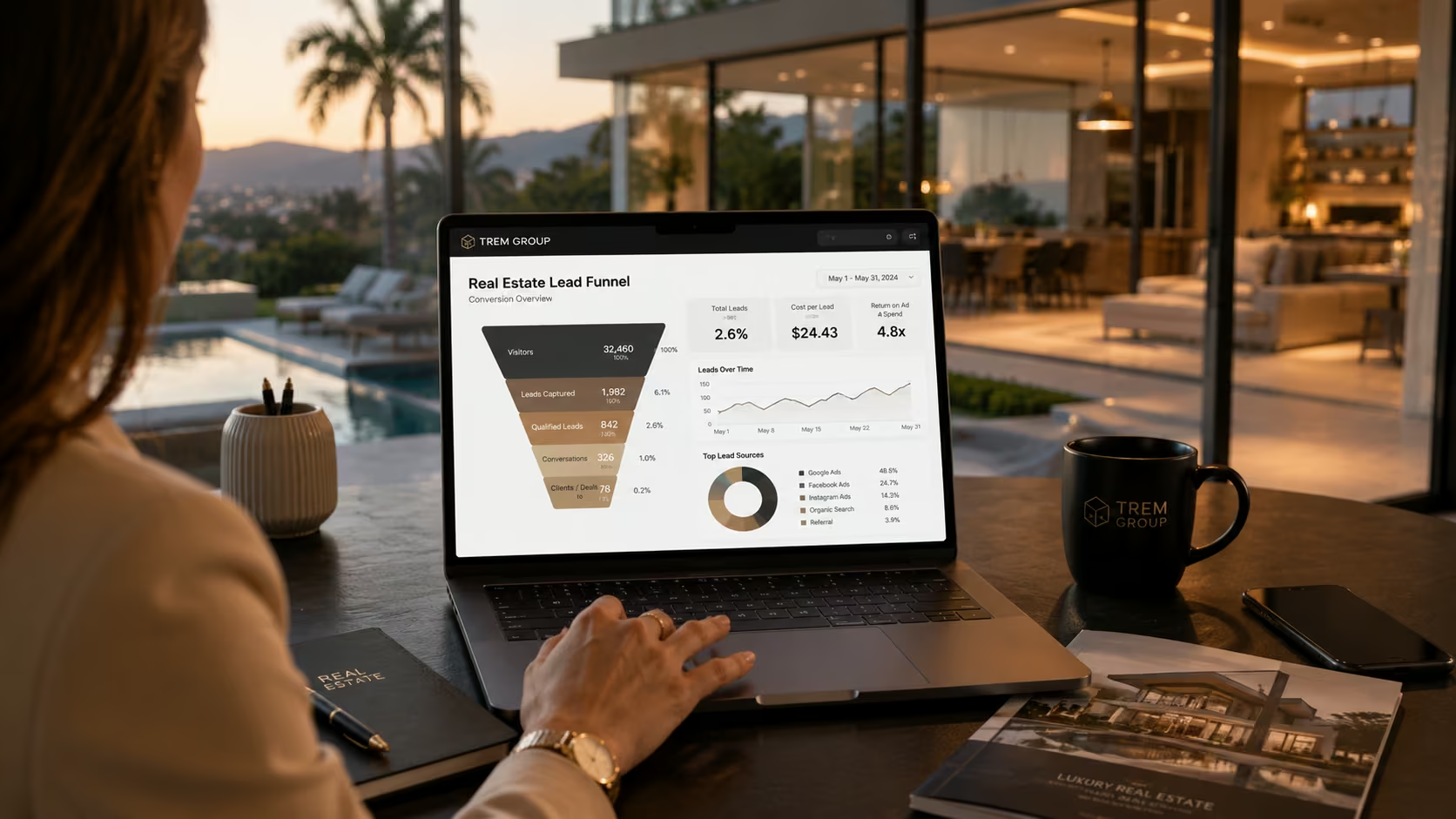
Know what each channel costs to produce a lead, and, more important, what it costs to produce a closing. A channel at a $10 cost per lead can be worse than one at $60 if the cheap leads never close.
Run the math all the way to revenue: ad spend divided by deals closed, set against the commission those deals brought in. Cut what loses, feed what wins.
This is the discipline behind every account we manage, and it’s why we report on cost per acquisition and return, not vanity clicks.
For a full breakdown of how paid, organic, and nurture work together in one system, see our approach to real estate marketing and the strategies we cover on our real estate blog.
Building a Real Estate Lead Generation System
A list of tactics is not a plan.
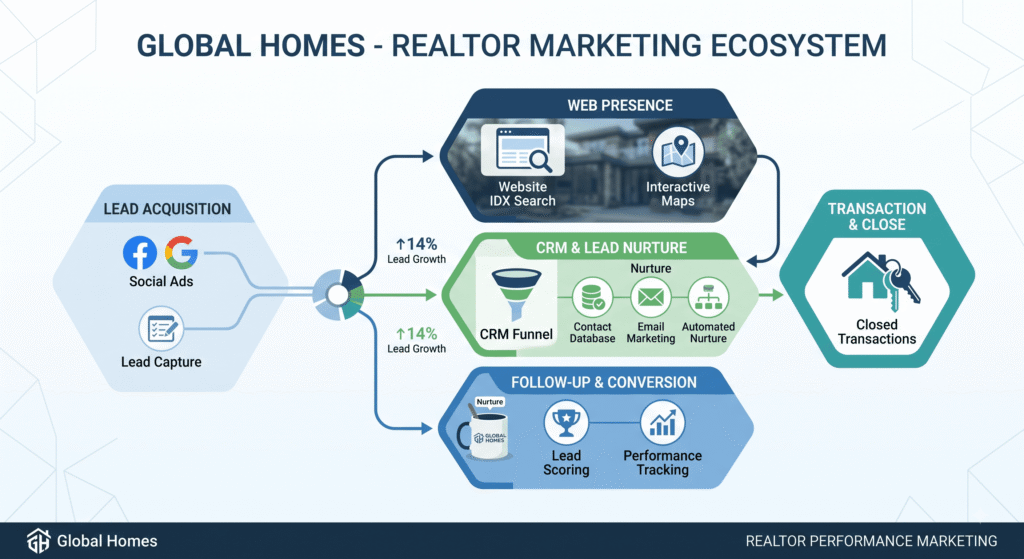
The agents who win turn a handful of these ideas into real estate lead generation systems that run the same way every week, so leads don’t depend on whether they happened to feel motivated that day.
Pick two or three channels that fit your market and budget, connect them to one CRM, and write down the exact follow-up steps that fire the moment a lead comes in.
That repeatable loop, capture, qualify, follow up, report on cost per closing, is what separates a real estate lead generation system from random activity.
Build the system once, then spend your time feeding it and reading the numbers, instead of starting from scratch every month.
Ready to Build a Lead Machine That Actually Produces?
You don’t need all 50+ tactics. You need the right handful for your market, built well, tracked honestly, and followed up fast.
That’s the difference between agents who buy leads and agents who build a pipeline.
For more than 10 years we’ve worked only in real estate. We’ve managed over $450M in ad spend, built our own IDXBoost platform to turn website traffic into registered leads, and put in the reps in Miami and luxury markets where the margin for error is thin.
Everything we do ties back to measurable return, not clicks that look good in a screenshot.
If you want a lead generation system built and managed by a team that does this all day, every day, let’s talk.
Book a free consultation and we’ll look at your market, your current numbers, and where the fastest wins are hiding.
Reach out at info@tremgroup.com and we’ll map a plan that fits your goals and your budget.
Looking To Grow Your Online Presence?
Your website should be a powerful tool for growth. Let’s enhance your website to attract and convert visitors into loyal customers. Book a demo today