Your logo is the first impression of your brand. In real estate, where trust, credibility, and perceived expertise drive every transaction, a strong logo isn’t a luxury. It’s a requirement. But here’s the problem: the real estate industry is flooded with forgettable logos. Generic house icons. Predictable serif fonts. Color palettes that blend into every other agent’s marketing materials. If your logo looks like it came from a $50 template pack, you’re signaling that your listing marketing will be equally generic. At TREMGroup, we believe your visual identity should reflect the caliber of the properties you represent. This guide covers the psychology, design principles, and real-world examples that separate elite real estate brands from the rest.
The Psychology of Real Estate Branding
In luxury markets, branding is about subconscious signaling. Every element of your logo should solve a specific physiological need for the client: Trust and Stability: Clients are making the largest financial decision of their lives. They need to know that you are established, reliable, and not going anywhere. Expertise and Authority: Your logo should communicate that you own your niche. In luxury markets, this often means restrained elegance, less is more. Market Position: Whether you are a luxury specialist, first-time buyer advocate or a commercial powerhouse, your logo should instantly communicate your “vibe” without needing an explanation. Personality: A team of young, energetic agents should not have the same logo as a 40-year-old family brokerage. Your logo should reflect the personality of the people behind it. The most common mistake in real estate branding is trying to communicate everything at once. The best logos are focused: they nail one or two signals and let the rest of your marketing fill in the gaps.
Types of Real Estate Logos
1. Wordmark (Logotype)
A wordmark logo uses only typography: your name, styled distinctively. This is often the most effective approach for real estate professionals because it is perfect for building name recognition. Best for: Individual agents, teams, and brokerages who want their name to be the brand. Luxury agents especially benefit from wordmarks because they convey sophistication through typography. Examples: Sotheby’s International Realty: classic serif communicating heritage; Compass: clean modern sans-serif; Douglas Elliman: elegant serif with generous letter spacing.
2. Lettermark (Monogram)
A lettermark uses initials to create a visually compelling composition. This works well when the brand name is long or when targeting ultra-luxury markets Best for: Teams or brokerages with longer names, agents with distinctive initials, or brands targeting ultra-luxury markets where a monogram conveys exclusivity. Examples: CB (Coldwell Banker): recognizable and compact; KW (Keller Williams): bold and approachable; Karim Daneri’s KD Prime Properties: sophisticated initials paired with a premium brand name.
3. Icon + Wordmark (Combination Mark)
A combination mark pairs a graphic element with the brand name. It is the most versatile format for digital and print marketing. Best for: Brokerages building brand equity over time, agents who want a recognizable symbol alongside their name, and brands that need to work across many formats. Examples: RE/MAX balloon icon: iconic and recognizable; Century 21, the seal creates establishment; eXp Realty: modern and tech-forward.
4. Emblem
An emblem integrates text within a symbol or badge shape. Think of it as a seal or crest. It communicates heritage and prestige. Best for: Established brokerages, luxury brands, and markets where tradition and legacy are valued. Examples: Engel & Völkers shield emblem communicates European luxury. Traditional family brokerages with crest-style emblems and established dates.
5. Abstract Mark
Uses geometric shapes that don’t directly represent a house. It’s the most distinctive but requires significant brand-building to create association, but it’s also the most distinctive when executed well. Best for: Real estate technology companies, large brokerages with marketing budgets to build awareness, and brands that want to stand apart from the house-icon crowd.
Color Psychology in Real Estate Branding
In the high-stakes world of real estate, color isn’t just a design choice, it’s a subconscious anchor. The right palette communicates your market position before a single word is read.
Navy Blue and Dark Blue
Signals: Unshakable trust, professionalism, and institutional authority. Best for: Luxury brokerages, established agents and commercial firms in real estate. Warning: Navy is the most popular color in real estate for good reason: it communicates exactly what clients are looking for. The risk is that it’s so popular it can feel generic unless paired with distinctive typography or high-contrast accents.
Black and Charcoal
Signals: Absolute exclusivity, sophistication, modernity, and a “members-only” aesthetic. Best for: Ideal for ultra-luxury agents, boutique brokerages, and high-end developers. Tip: Black is the ultimate tool for luxury positioning. To truly elevate the brand, pair it with metallic gold or silver accents for a premium feel.
Gold and Champagne
Signals: Wealth, prestige, top-tier achievement, and exclusivity. Best for: Luxury agents, award-winning producers and world-class luxury developments. Caution: Use with restraint. Gold can quickly veer into “gaudy” territory if overused as a primary color. It works best as an accent against black, navy, or white.
Green
Signals: Prosperity, sustainability, tranquility and organic growth Best for: Lifestyle-oriented markets, eco-conscious developments, or agents dominating suburban and rural territories. Opportunity: Green is currently underutilized in the luxury sector, offering a unique opening for brands looking to stand out with a “fresh” yet high-value perspective.
Red and Burgundy
Signals: Power, urgency, passion and high-octane energy. Best for: Bold, high-volume teams and disruptive brand personalities. Caution: Red demands attention but can feel aggressive in a delicate negotiation. Use it sparingly to highlight calls to action or key brand elements.
White and Minimalist Palettes
Signals: Clarity, modern openness, openness, and contemporary luxury. Best for: Modern architecture specialists, tech-forward brokerages, and clean, digital-first brands. Tip: Minimalist palettes shift the focus to the property photography, making the brand feel like a sophisticated gallery rather than a sales office.
Typography for Real Estate Logos
If color is the “mood” of your brand, typography is its voice. In real estate, the fonts you choose signal either a legacy or a future-forward disruption.
Serif Fonts
Signals: Tradition, reliability, institutional elegance, and establishment. Best for: Luxury brokerages and agents targeting high-net-worth demographics who value tradition Classic serif fonts like Garamond or Didot communicate a “timeless sophistication” that never goes out of style.
Sans-Serif Fonts
Signals: Modernity, clarity, approachability, and a digital first-mindset. Best for: Tech-forward brands and teams targeting a younger, fast-moving demographics. Industry Examples: Notice how Compass Side, and eXp Realty use clean sans-serifs to project transparency and innovation.
Script and Handwritten Fonts
Signals: Personal touch, elegance, individuality. Caution: Script fonts are extremely difficult to execute well in logos. They often sacrifice legibility for style and can look dated within months. Use them only as accents, never for your primary name. Typography Rules of Thumb:
- The “Rule of Two”: Never exceed two fonts. Use one for your primary brand name and a clean, contrasting one for your tagline or market descriptor.
- “Luxury Tracking” Effect: Letter spacing (tracking) is the secret weapon of high-end design. Generous spacing between letters instantly elevates a logo from “standard” to “boutique”.
- Weight equals confidence: While thin, delicate fonts can feel “editorial”, they can also feel fragile. Medium to bold weights communicate stability and confidence clients expect during a closing.
- Test at every size: Your typography must be just as legible on a 16px favicon (the icon in a browser tab) as it is on a 6-foot yard sign or a massive digital billboard.
50+ Real Estate Logo Examples by Category
Luxury Residential
These brands represent the pinnacle of luxury real estate identity. While some are global benchmarks, others are standout examples from the TREMGroup portfolio, where we’ve helped elite agents translate billions in sales into world-class digital brands.
- The Chad Carroll Group (Compass, Miami): Bold, high-octane personal branding. Integrating a powerful individual identity within the clean visual system of Compass. With $8B+ in career sales, the confident, modern typography mirrors their market dominance.
- Nancy Batchelor Team (Compass, Miami Beach): Approachable luxury. With $2.5B+ in career sales, this branding balances warmth with high-end sophistication, proving that “luxury” doesn’t have to feel cold or distant.
- David Siddons Group (Douglas Elliman, Miami): Ranked in the top 0.1% nationwide, #1 at Douglas Elliman Miami. Analytical, authoritative identity with the LuxlifeMiamiBlog is designed for the data-driven investor who values expertise over flash.
- The Probst Group (Corcoran, Miami): Representing $10B+ in career sales. Elite performance branding with concierge-level sophistication that dominates the Miami-Dade and Miami Beach.
- Karim Daneri: KD Prime Properties: A powerful KD monogram that bridges the gap between personal authority and a scalable business entity. Perfect for a brand with $5B+ in lifetime sales.
- The Askowitz Group (RE/MAX, Miami): With 36+ years and $2B+ closed, this streamlined identity projects the reliability of a legacy brand that has seen every market cycle, projecting veteran authority.
- Sotheby’s International Realty: A masterclass in the classic serif wordmark. Their navy and gold palette remains the industry standard for traditional prestige and heritage branding.
- The Agency: Modern luxury disruptor. Bold, sans-serif typography with a distinctive red “period” that has become one of the most recognizable marks in modern luxury real estate.
- Compass: By pairing a simple compass icon with clean typography, they redefined what a real estate “tech” brand should look like—minimal and instantly recognizable at any scale.
- Engel & Völkers: Their shield emblem is one of the strongest in the world, communicating a long history of European heritage, luxury, and international reach.
Real Estate Teams and Brokerages
- Mottola Group (Compass, Delaware): The #1 team in Delaware with a 30-year legacy and over $500M in annual sales. Their clean wordmark achieves a perfect balance between a strong team identity and Compass’s global brand standards.
- The Audrey Ross Team (Compass, South Florida): Reflecting over $200M in annual sales volume, this branding is a study in high-volume production met with uncompromising luxury positioning.
- Sandak Team (Manhattan/Brooklyn): Representing 35+ years of combined experience and $250M+ closed, their visual identity projects a polished, urban sophistication tailored for the NYC market.
- Hudson Advisory Team: A brand built on advisory positioning rather than just transactional energy. The name itself serves as a strategic brand statement that sets them apart as consultants.
- Tobon Group: Dominating the South Florida luxury sector with a professional and culturally fluent identity. Their branding resonates deeply with the international clientele of the Miami market.
- Ziegelbaum Group: A masterclass in how a long surname can be transformed into a sophisticated wordmark. Through meticulous typography and generous letter spacing, they’ve created a high-end “boutique” feel.
- Cervera Real Estate: With a 50-year legacy, 70,000+ properties sold, and 120+ developments, this identity represents a powerhouse brokerage. The brand combines massive scale with the longevity of a family-owned empire.
- Peter Barkin Group (Compass): Celebrating $100M+ in closed sales, this clean personal brand leverages the agent’s name as the primary mark of trust and professional identity.
- Coldwell Banker: One of the most recognized icons in residential real estate. Their recent rebrand successfully modernized the “CB” mark while retaining decades of hard-earned trust equity.
- Keller Williams: A bold, agent-focused wordmark using high-contrast red and white. It is designed to be instantly recognizable and project high-octane energy in any market.
Individual Agents
- Olga Monson (Fortune International Realty): A five-year Platinum Circle Award winner with a brand that projects a consistent, high-performance luxury aesthetic for the Miami market.
- Bill Barrett (Luxury Home Consultants): With over 2,000 transactions and 33 years in the business, this identity balances personal authority with a niche focus on exclusive buyer representation.
- Lucas Lechuga (Miami Condo Investments): A brilliant example where the brand name doubles as a high-value SEO keyword. This niche-specific identity provides immediately clear positioning for the condo market.
- Brenda Gramajo (Douglas Elliman): A luxury and pre-construction specialist with 15+ years of experience. Her personal brand is elegant and internationally oriented, perfect for a global clientele.
- Ramses Hernandez: A South Florida advisor since 2013 with a clean, professional identity. The branding focuses on an “advisory-first” approach that builds long-term client trust.
- Glen Primak / AgentFTL: Using a domain name as a brand identity to communicate a geographic focus instantly. “FTL” anchors the brand to Fort Lauderdale with zero ambiguity.
- Rie Nakai: An international agent bridging Japanese minimalism with Miami’s luxury expectations. Her branding is a sophisticated nod to her heritage while remaining globally competitive.
- Marie Mangouta (Worth Group): A strong individual identity maintained within the larger Worth International luxury umbrella. It proves you can have a personal voice while leveraging a major brokerage’s power.
Real Estate Developers
- E11even Hotel & Residences (Miami): A bold, nightlife-inspired brand that broke conventions to help Adrian Sanchez close over $100M in pre-construction sales via TREM Group’s digital ecosystem.
- Pullman Gulch Union (Nashville): This 31-story luxury condo brand uses a dynamic, urban visual language to match the sophisticated growth of the Nashville market.
- Cervera Development Projects: With 120+ developments managed, Cervera’s branding strategy balances distinct project identities with a consistent thread of brokerage authority.
Content-Driven and Digital-First Brands
- LuxlifeMiamiBlog (David Siddons): A masterclass in content-driven branding designed to drive massive organic traffic and establish deep market authority.
- Miami Condo Investments (Lucas Lechuga): This SEO-friendly, niche-specific name proves that a strategic brand identity is the ultimate shortcut to market dominance.
Logos That Break the Rules
- Use of photography as the brand: Top producers often use professional headshots as their primary “logo” to prioritize human connection over graphic icons.
- Location-first naming (AgentFTL, Miami Condo Investments): Leading with the market (e.g., AgentFTL) creates instant geographic authority and an immediate SEO advantage.
- Color rule-breakers: High-end brands are now using deep emerald or matte coral to stand out while maintaining a sophisticated, boutique feel.
- Typography-only brands: The purest form of branding. Premium typography and generous letter spacing often project more confidence than any icon.
- Brands that evolve: Many TREMGroup clients have refined their logos as they scaled, showing a natural progression toward luxury market maturity.
Common Real Estate Logo Mistakes
1. The Generic House Icon
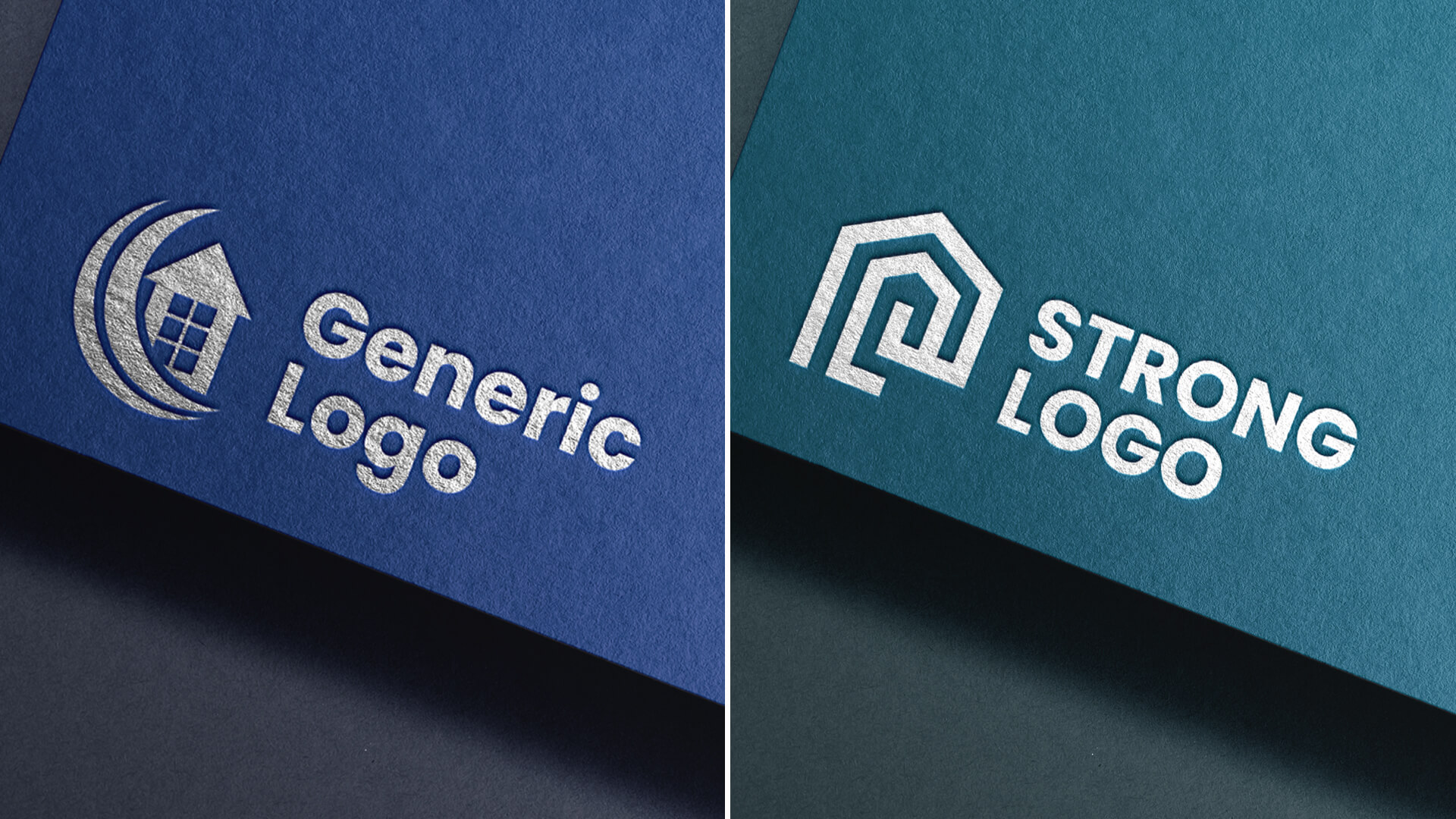
A house outline with a chimney is the clip art of real estate logos. It fails to communicate your specific brand and makes you indistinguishable from thousands of other agents.
2. Too Many Elements
A logo featuring a house, a key, your name, a tagline, a location isn’t a brand, it’s a brochure. Simplify ruthlessly.
3. Trendy Design Over Timeless Design
Design fads like gradient meshes or 3D effects date quickly. Real estate is a long-game business; your logo should be built to age with grace.
- Low-Value Color Palettes
Bright orange, lime green, or hot pink often signal “discount” in a high-end market. Stick to palettes that project trust, competence, and sophistication.
- Template Logos
Logos from $99 generators are technically functional but strategically empty. They are the visual equivalent of wearing a rental suit to a luxury listing appointment.
6. Ignoring Digital Requirements
If your logo doesn’t work as a 16×16 pixel favicon or a social media avatar just as well as it does on a yard sign, your brand identity is incomplete.
DIY Logo Design vs. Hiring a Professional
When DIY Can Work
If you’re a new agent with a limited budget, these tools can help you launch a basic visual identity:
- Canva: User-friendly templates and a large font library. Good for basic wordmarks. Free tier is sufficient for initial branding.
- Adobe Express: Similar to Canva with Adobe’s font and asset library.
- Looka: An AI-driven generator that produces functional, modern results for those who need a logo “yesterday.”
- Hatchful by Shopify: A quick resource for real estate-specific templates that provide a baseline professional look.
When to Hire a Professional
A “logo” is a graphic; a “brand” is an asset. Professional design becomes essential when:
- Positioning in the luxury market: High-net-worth clients have a sharp eye for quality. A template-based logo instantly undermines your credibility in a $5M+ listing presentation.
- Scaling a team or brokerage: Consistency is key. You need a brand system that multiple agents can use across diverse marketing channels without losing its impact.
- You’re rebranding: Professional guidance ensures your transition is a proactive move toward growth, not a reactive fix for a dated look.
- You need a complete brand system: Beyond a logo, you receive a full ecosystem: color palettes, typography standards, and brand usage rules that ensure long-term authority.
| Service Level | Typical Cost | What You Get |
| Freelance designer (mid-level) | $500–$2,000 | Primary logo + basic variations |
| Boutique design studio | $2,000–$7,500 | Logo + brand guidelines + basic marketing templates |
| Full branding agency | $7,500–$25,000+ | Complete, multi-channel brand identity system |
| TREMGroup branding services | Custom pricing | Real estate-specific brand strategy, logo, digital implementation |
Real Estate Logo Design Checklist
Before you commit to a visual identity, run your brand though this “High-Stakes Audit” to ensure
- Legibility: Is it readable at 16px (favicon) and at 6 feet (yard sign)?
- Versatility: Does it work in full color, single color (black), and reversed (white on dark)?
- Relevance: Does it communicate your market position without explanation?
- Distinctiveness: Would someone remember it after seeing it once?
- Timelessness: Will this still look professional in 5–10 years?
- Technical soundness: Do you have vector files (SVG, AI, EPS) for print and high-res PNG for digital?
- Consistency: Is there a documented color palette, font spec, and usage guideline?
How TREMGroup Approaches Real Estate Branding
The brands featured throughout this article: from Chad Carroll’s $8B+ luxury powerhouse to David Siddons’ content-driven Luxlife Miami Blog to the Pullman Gulch Union development in Nashville: represent the strategic depth of our portfolio. Each began with a strategic conversation about positioning and ended with a complete digital brand identity. Every project we undertake begins with a deep-dive conversation into market positioning and concludes with a complete digital brand identity. Our expertise spans individual agents, high-volume teams, and $500M+ luxury developments. Whether you are dominating a local niche or launching a global project, our engagement provides the strategic direction, elite concepts, and comprehensive brand guidelines necessary to win. [ Ready to elevate your real estate brand? Schedule a branding consultation → ]
Frequently Asked Questions
How much should I invest in a real estate logo?
A strategic benchmark is 1–2% of your first year’s projected gross commission income. For an emerging agent, an investment of $500–$1,000 provides a professional foundation. For an established team generating $500,000+ in GCI, a $5,000–$10,000 investment is appropriate to ensure a globally competitive identity.
Should my logo include a house or property icon?
In most cases, no. House icons are generic and fail to differentiate your brand. Your logo should communicate your unique brand personality and high-end positioning, not just the category you work in.
How often should I update my brand identity?
A well-designed, timeless logo should last 7–15 years. If you feel the need to rebrand more frequently, it’s a sign that your previous identity was built on a fleeting trend rather than core brand principles.
Can I use my brokerage’s logo instead of my own?
You can, but you risk having zero brand equity if you ever switch brokerages. Building a personal brand alongside your brokerage affiliation provides the portability and long-term asset value needed to scale your business independently.
Looking To Grow Your Online Presence?
Your website should be a powerful tool for growth. Let’s enhance your website to attract and convert visitors into loyal customers. Book a demo today